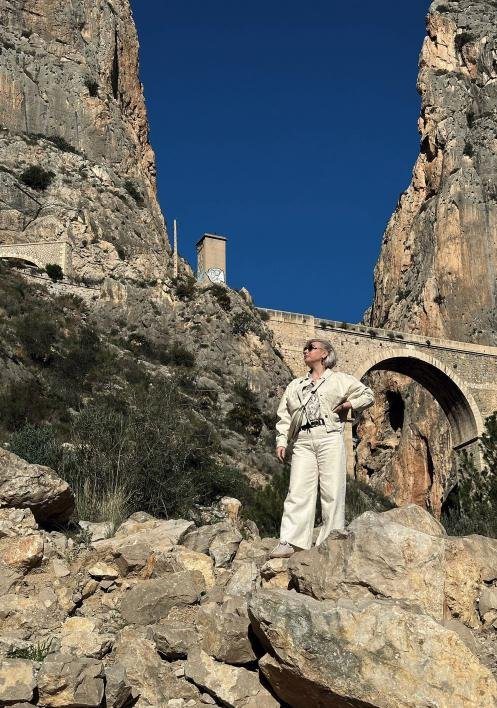
Canelobre Caves near Alicante: what to see and how to get there from Benidorm
The Canelobre Caves at Busot, 26 km from Alicante, have one of the highest underground vaults in Spain: 70 metres, as tall as a 23-storey building. Inside you’ll find a stalagmite more than 100,000 years old and a 200-seat concert space with the acoustics to match. The discovery of the caves is credited to the Arabs in the tenth century, and during the Spanish Civil War aircraft were repaired here. It makes a good day trip from the Costa Blanca.

In this article
What to see in the Canelobre Caves
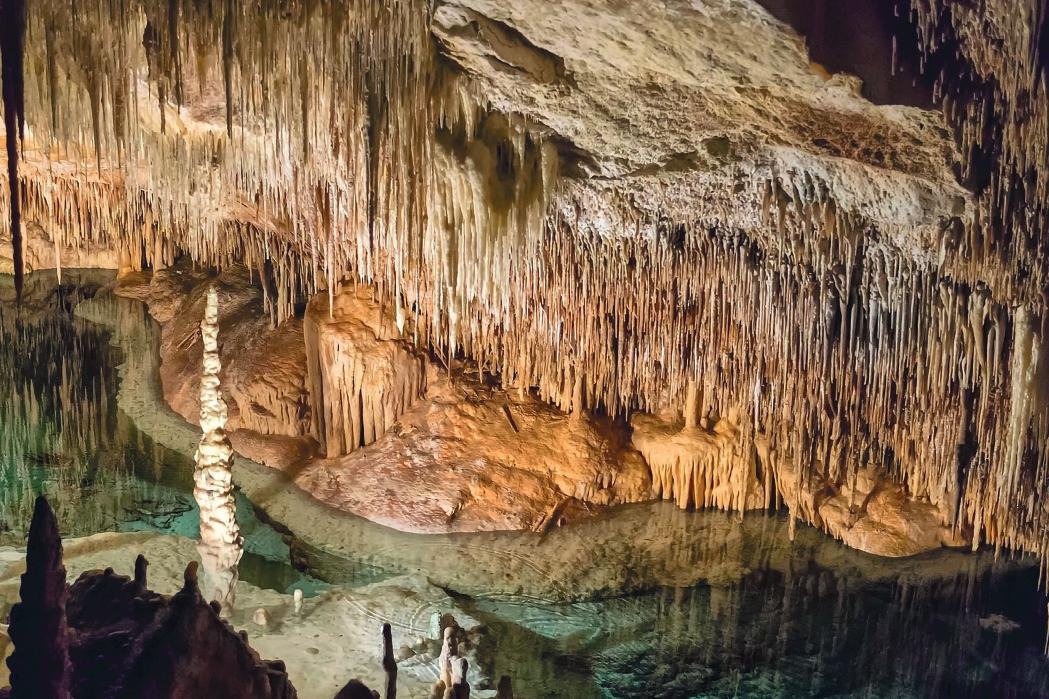
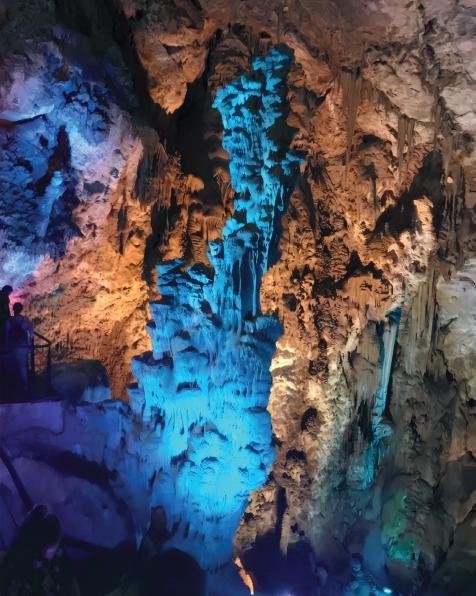
The Canelobre Caves (Cuevas del Canelobre in Spanish) are a natural museum, a piece of history and a concert hall rolled into one. Their stalactites and stalagmites hold 7 million years of the Earth’s history.
Stalactites grow downwards and look like icicles. Stalagmites grow upwards and look like pillars. Both form from drops of water rich in calcium carbonate, and both grow by 1 cm every 100 years. When a drop falls from the ceiling, some of the mineral stays up above, and that’s how a stalactite grows. When the same drop lands on the floor, the rest of the mineral builds up below, and that’s how a stalagmite grows. If the two meet, they form a column.
That’s how the famous Sagrada Familia column came about. It stands more than 25 metres tall and takes its name from its likeness to the Sagrada Familia basilica that Gaudí designed in Barcelona. The El Canelobre stalagmite, which is more than 100,000 years old, formed the same way. It’s shaped like a candelabrum (canelobre in Valencian), which gave the caves their name.
Here’s what else to know before you go:
- One of the highest vaults in Spain: 70 metres, comparable to a 23-storey building.
- Arab discoverers: the caves are said to have been found by Arabs in the tenth century, and Busot itself was founded under Arab rule.
- The legend of the gold: the story goes that Christians searched the caves for hidden Arab treasure and found nothing.
- A workshop from the Spanish Civil War: the Republicans repaired planes and aircraft engines here.
- 145 million years: the age of the limestone in which the caves formed (Jurassic period).
- Concerts for 200: the caves host small music events, and the acoustics are so perfect that they’ve staged rock concerts, meditation evenings and, of course, classical music.
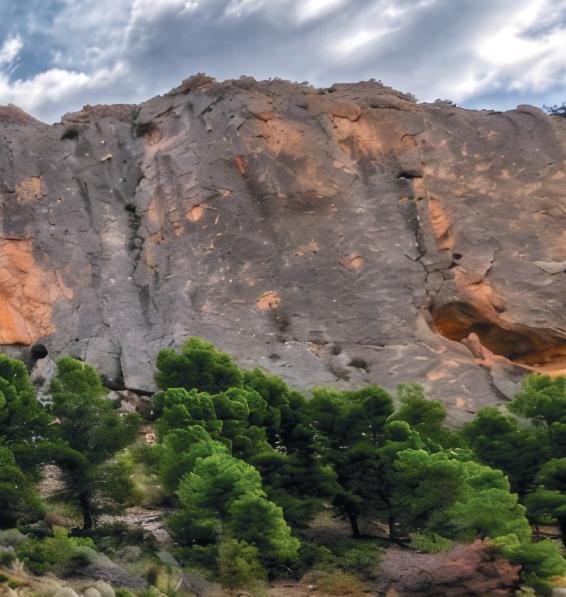
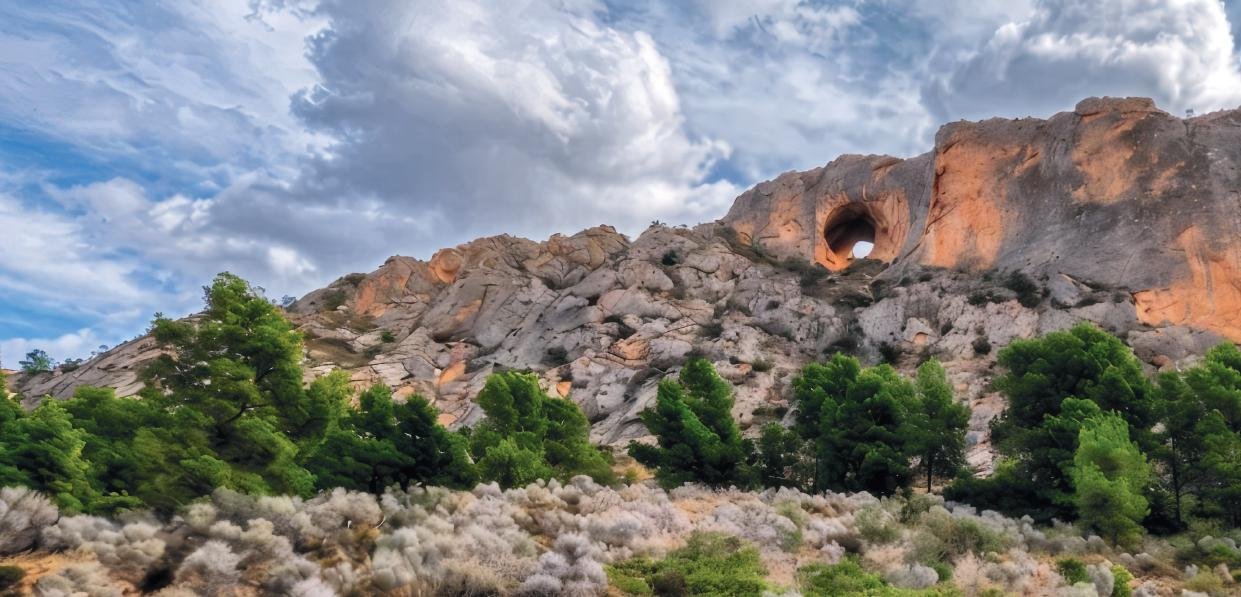
- A round hole in the mountain: the famous hole in the rock of Cabeçó d’Or, directly above the caves, is known in Valencian as “El Pet de la Reina”, which means “the Queen’s Fart”.
- A rock and mineral shop: at the entrance you can buy minerals for your collection, for jewellery or for your home.
- The ideal day trip: the caves are in the hills above Busot, half an hour’s drive from Alicante and 45 minutes from Benidorm.
How to get to the Canelobre Caves
Driving is easiest. From central Alicante it’s about 26 km and 30–35 minutes: take the A-70 ring road, then the CV-800 towards Xixona, the CV-773 to Busot and the CV-774 to the turn-off for the caves. From Benidorm it’s about 48 km and 45 minutes: take the N-332 or the AP-7 (toll-free since 2020) to the A-70, then follow the same route.
The last two or three kilometres wind up the CV-776, climbing about 230 metres. There’s a car park for visitors at the entrance, and it’s locked after closing time.
No bus goes all the way to the caves. Infrequent Vectalia buses run to the village of Busot: the C-51 from Mutxamel and the C-52 from El Campello, which you can reach from Alicante by tram. From the village it’s another 5 km or so uphill along the road, about an hour and a half on foot. So without a car, it’s simpler to take a taxi (about half an hour from Alicante) or join a tour.
Opening hours and tickets in 2026
From 1 September to 30 June the caves are open Tuesday to Friday from 10:30 to 16:50, and at weekends and on public holidays from 10:30 to 17:50. They’re closed on Mondays. In July and August they open every day from 10:30 to 19:30. The guided tour lasts about 45 minutes, and groups go in every 40 minutes. It’s 17–18°C inside all year round, so a light jumper comes in handy even in summer.
An adult ticket costs €12 and includes entry to the ethnic music museum in Busot. The reduced ticket (pensioners, students) is €6, the child ticket (ages 5–16) is €5, and under-fives go free. Check the hours and prices on turismobusot.com before you travel.
Sources: Busot tourist office (turismobusot.com), Turisme Comunitat Valenciana (comunitatvalenciana.com), Vectalia bus routes as listed by Busot town council.
Frequently asked questions
How much are tickets for the Canelobre Caves?
In 2026 an adult ticket costs €12, including entry to the ethnic music museum in Busot. A child ticket is €5, and under-fives go free.
Can you get to the caves by bus?
Not all the way. Infrequent Vectalia buses only go as far as the village of Busot, and from there it’s another 5 km or so uphill, so a car, taxi or tour is easier.
What’s the temperature inside the caves?
About 17–18°C all year round.
This version of the article was translated from Russian with the help of AI.
SunClub Business directory
SunClub Business is the directory run by SunClub Network magazine: 240 businesses and professionals in Spain. The editors review every business page before it goes live. Travel, Leisure & Celebrations in the directory: 19 →
Add your business to the directory: a basic business page is free →