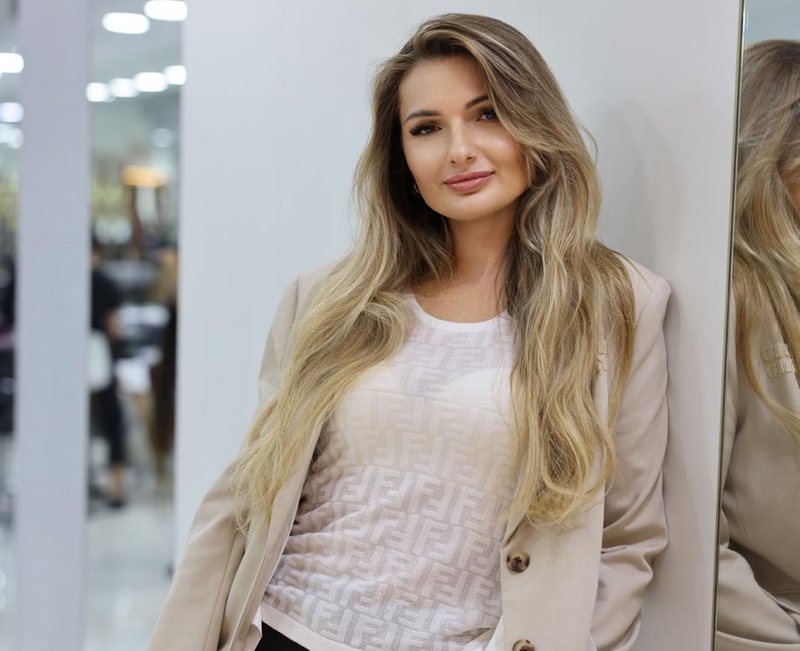
Is plastic surgery worth it? Surgeon Andrey Kharkov on the fears that hold people back
Andrey Kharkov has carried out more than 20,000 operations and is convinced that the word “never” usually hides a fear. In this interview he tackles the most common worries: “it will show”, “I won’t like it”, “the anaesthetic”. He also explains how MAEGA Clinic in Wrocław, Poland, works, with its own rehabilitation centre, a rule of three days, three weeks and three months, and a full year of support for each patient.
Partner content. Prices and terms as of the publication date.

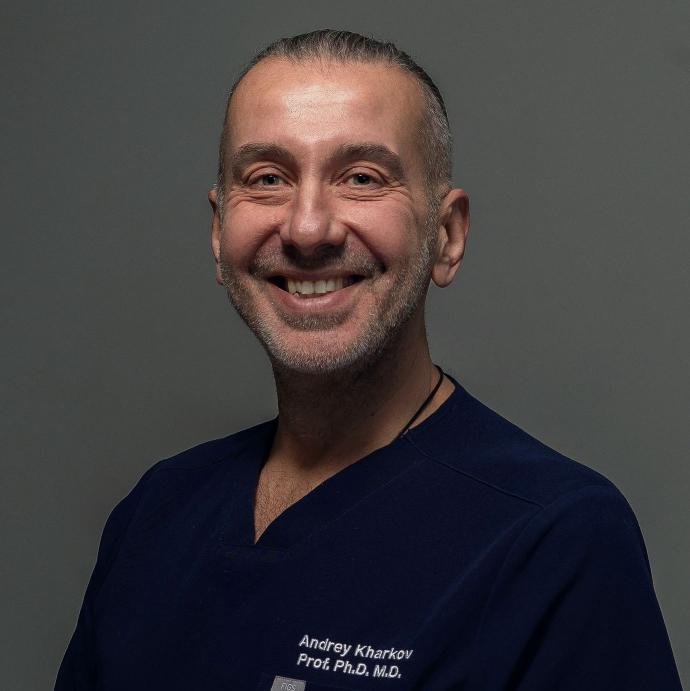
Prof. Andrey Kharkov, MD, PhD, MBA, is a plastic surgeon with 28 years of experience, the author of 77 scientific publications and president of the All-Ukrainian Association of Plastic Surgery. He works at MAEGA Clinic in Wrocław, Poland, so for anyone living in Spain, surgery with him means a trip abroad.
Professor Kharkov, many women say, “I’d never have plastic surgery.” Where would you begin with a patient like that?
I wouldn’t try to change her mind. But I would ask her one question: “Are you sure you don’t want it, or are you afraid?” Very often the word “never” hides fear, doubt or a lack of understanding. These women have nothing against looking 10 years younger. What they lack is trust: in doctors, in the safety of the operation, in the final result.
I’ve carried out more than 20,000 operations. I know for certain that many of my patients went from ruling out surgery altogether to trusting me and my team completely. Fear held them back too, but now they’re enjoying the result and asking, “Why didn’t I do this sooner?”
You mentioned fears. Which ones come up most often?
The fear that the result will be bad, that they won’t look like themselves, that it will look unnatural. That they’ll end up like someone on Instagram who gets talked about for an “overdone” face. But the truth is that good plastic surgery is the kind you can’t see. My job as a surgeon is to make sure nobody guesses you’ve been on my operating table. I want people to say, “You look wonderful. Have you been on holiday?”
Some people see a natural look as a compromise. To me it’s the pinnacle of the craft. That’s why I recommend the Deep Plane Facelift over separate targeted procedures. The surgeon works on the deeper layers of the face as well as the skin, so the whole face is rejuvenated together. Some patients are also afraid they won’t like the result. In those cases we use 3D modelling, which helps them see the likely result in advance and make an informed decision.
What do you say to people who are afraid of the anaesthetic?
It’s a natural worry. Anaesthesia is a serious part of an operation, and it’s important to understand how safety is handled. At MAEGA Clinic we have highly experienced anaesthetists and latest-generation equipment, and everything is set up to follow European protocols. Patients are monitored 24/7 in a separate rehabilitation centre. I understand that people need to feel in control for their own peace of mind. That’s why we explain every detail, answer any question and don’t rush anyone into a decision. We don’t want anything left unclear, so that you can go into the operation calm and trusting, knowing you’ll be looked after.
Tell us about your clinic and the rehabilitation centre.
MAEGA Clinic is in the Polish city of Wrocław. It’s a modern surgical centre with advanced Swiss and German equipment that meets the highest standards of safety and sterility. We have our own rehabilitation centre, where patients can recover in comfort and under supervision.
People come to us for face and neck rejuvenation, nose surgery (rhinoplasty), the full range of breast operations (lift, augmentation, reconstruction), tummy tucks and body contouring.
Patients come to you from all over the world. How do you organise their recovery once they’re back home?
That’s right, many patients fly in from other countries, and they worry it will be hard to get through all the stages of treatment on their own. We take that fear away by organising the whole course of treatment for them. We also provide full medical support, from preparation to recovery, so they’re never left on their own. We have a rule of three: three days to recover after the operation, three weeks for healing and three months to get back to normal life. We’re in touch at every stage. Once the operation is over, we go on looking after each patient for a whole year.
Who are your patients? Mostly women?
Yes, women make up most of our patients today, around 85%. They’re managers, business owners and women in creative and public-facing professions. They’re also mothers and loving wives who give a lot to their families and at some point decide to look after themselves too. They want to get their body back after childbirth, freshen up their face or regain a sense of confidence and femininity.
But every year we also see more interest in aesthetic surgery from men (around 15%). What matters to them is careful, subtle change with no visible signs of surgery, so that they look fresh and keep their masculine charisma and their status.
This shows that looking after your appearance and your quality of life is no longer just a women’s concern. It has become part of how mature, thoughtful people treat themselves.
How do you decide what needs doing to get a harmonious result?
I don’t look at a patient piece by piece. In many clinics surgeons specialise narrowly: one only does breasts, another only noses, another a single area of the face. But in plastic surgery the body and face don’t exist as separate parts, and every area is linked to other structures and functions. My approach rests on the logic of the anatomy as a whole. I assess a patient in terms of proportions, tissue balance, biomechanics, healing and the long-term result. That lets me make decisions that fit the person’s overall appearance, rather than ones that simply “look good in isolation”.
I also always think about how the tissues will change in three, five or ten years’ time. That guides my choice of technique and how much surgery to do. Each case gets its own treatment plan, which takes into account the age of the tissues, the type of ageing, how the person heals and their lifestyle. That makes the result more natural and longer-lasting.
And what would you say to anyone reading this interview and thinking, “Maybe I should too”?
I’d say: be honest with yourself. If you feel you want a change, don’t keep putting yourself on hold. I won’t try to persuade you. But if you want to feel comfortable in your own skin and at peace with yourself, I’ll help you get there with care, professionalism and deep respect for you.

This version of the article was translated from Russian with the help of AI.
SunClub Business is the directory run by SunClub Network magazine: 240 businesses and professionals in Spain. The editors review every business page before it goes live. Browse the directory →
Add your business to the directory: a basic business page is free →
 No motivation to exercise after moving abroad: why it happens and how Katya Zayats got me back into my body
 Haik Ovakimyan, hair stylist in Valencia: cut and colour matched to your face and skin tone
 Hair extensions in Alicante and Valencia: Makarova Hair Studio
 Alexander Podporin: health as a system and a Coral Club business in Spain