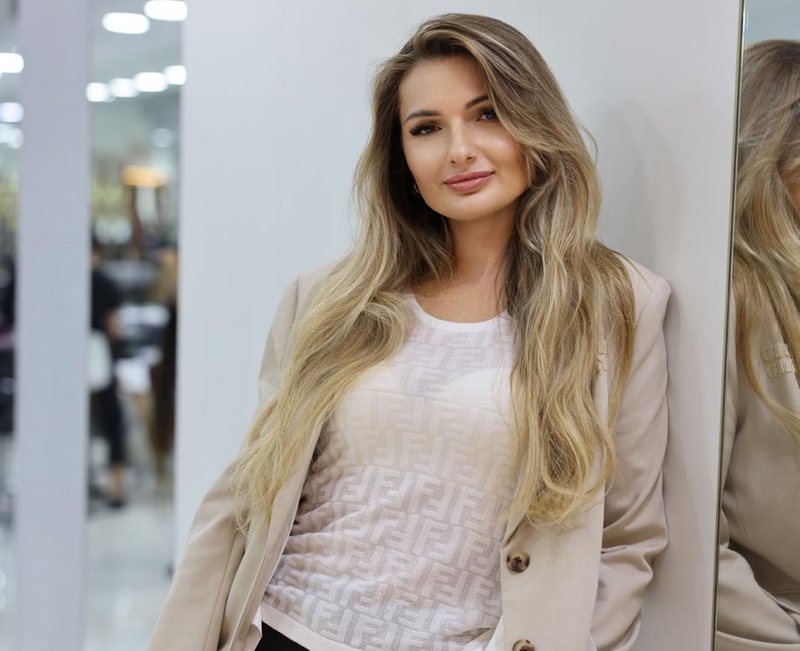
Dentist in Valencia: upfront prices and a free first consultation at Di Sí DentClinica
Di Sí DentClinica in Valencia publishes its prices, offers a free first consultation with a panoramic X-ray and treats children without sedation. The clinic belongs to Maria and Dmitry Naumov, who bought it in a neglected state when they had been in Spain for only a short time. Maria talks about how they rebuilt it, who works in the team and what tooth decay ends up costing if you put off going to the dentist.
Partner content. Prices and terms as of the publication date.
Dmitry Naumov in the SunClub Business directory: contacts and services →

Maria, you bought a clinic in a foreign country where you’d only lived for a short time. That sounds like quite a gamble. How did you make up your minds?
Honestly? We didn’t have much choice. We came to Spain in 2022. My husband is a dentist, but he couldn’t work until his degree was recognised (the process is called homologación), and that took two years and nine months. Still, this was the work we wanted to do. I studied dentistry too, and we met at university, although I never practised and was always more involved in the organisational side of the business. We had to think ahead, so when a clinic came up for sale, we went for it.
It was a Spanish clinic, but it was, you know, like an unloved child. Out-of-date materials, paperwork not in order, an owner who didn’t take it seriously. For the first few months we rebuilt every process from the ground up: licensing, the change of ownership, all the documents. In terms of sheer work it was like opening a clinic from scratch. When the inspector came and saw my paperwork, he asked, “This isn’t your first clinic, is it?” I said, “It is.” It all went through first time, with nothing to correct.
Patients still travel from other countries to see Dmitry. What kind of dentist do you have to be for people to cross borders to see you?
It comes down to trust, and that takes years to build. Dima, as I call him, has worked at well-known clinics and has 30 years of practice behind him. It’s that experience that lets him make the right call even in the hardest cases.
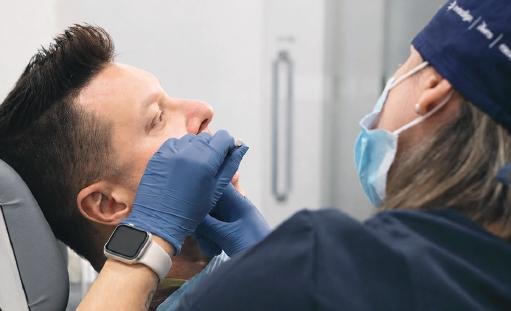
But there’s more to it than experience. What every single patient mentions is how gentle he is. No discomfort, no sudden movements, everything very calm. People physically feel it. Some dentists are professional but rough, as if they were working on a production line. Dmitry always keeps things relaxed and has a gift for finding the right approach with each person. Of course, if I had to choose between a very kind doctor and a highly skilled one, I’d choose the skilled one. Luckily Dmitry is both, which is rare.
I’d also add that dentistry in Spain is organised differently from what we were used to in the former Soviet countries. Dentists here cover a much wider range of work, and many specialists work as general dentists and do several kinds of treatment. My husband specialises in prosthodontics and aesthetic dentistry: complex restorations on implants, full-mouth reconstruction, cosmetic veneers. Before university he worked as a dental technician, so he knows the process from the inside, the technical side as well as the theory. That makes for high-quality work.
Tell us about the team at your clinic.
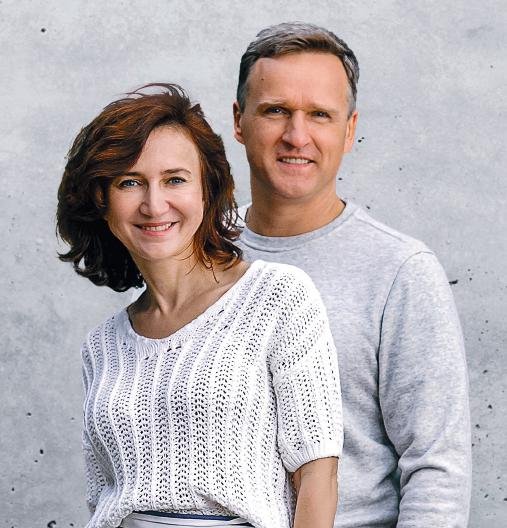
Gladly. We’re a small team but a very strong one. Dmitry, as you’ll have gathered, mainly does prosthodontics and aesthetic work. We have a wonderful children’s dentist. Our implantologist is a Spanish surgeon who is very much in demand in Valencia and works to the latest protocols. He trained in Cambridge and worked in England. He comes from a family of dentists: his father is a surgeon too, and he says that while the other boys were out playing football, his dad had him taking out stitches. For him it’s a true vocation. Patients who were a bit wary at first about seeing a Spanish surgeon have not once been disappointed.
We work in Russian and Spanish. If a patient doesn’t speak Spanish, one of us always interprets. Spanish patients feel at home with us as well, because our doctors speak Spanish like natives.
You treat children, and a trip to the dentist can be especially stressful for them. How do you handle the difficult cases?
Our children’s dentist is a gift to parents, and children are completely at ease with her. She connects quickly with even the youngest ones. Parents bring her the children other clinics couldn’t persuade to open their mouths: difficult cases, all kinds of moods, all kinds of fears. She gets there. There was one girl another clinic had tried and failed to treat several times. Our dentist managed it, and when that girl came back she was completely calm.
Children are children: one mood today, another tomorrow. We see children and we’re glad to. The one thing we don’t do is sedate them. That’s a deliberate decision. We manage without it and we’re proud of that.
Why shouldn’t people put off going to the dentist, especially if they’ve moved abroad?
Because coming in now will cost you far less than coming in later. Decay caught early means sixty euros and half an hour of your time. Once that same decay has reached the nerve and become pulpitis, you’re looking at root canal treatment, a different price and far more work. And if you leave it until you need implants or full-mouth reconstruction, we’re talking about thousands of euros.
Plenty of people who’ve moved abroad haven’t seen a dentist for a while, because they didn’t have a regular clinic and weren’t sure where to go. A lot of problems have built up in that time. That’s why it matters so much now to come for a check-up before anything starts to hurt. We offer a free consultation with a panoramic X-ray, so people can see where they really stand without waiting for pain to tell them.
And we’re always pleased when someone comes in with good dental work already in their mouth. Dmitry will say, “If you’re still in touch with your dentist, tell them I think highly of their work.” That has happened several times, and patients are very pleased to hear it.
We try never to comment on colleagues, here or in other countries. Though of course it’s nicer when we don’t have to redo really difficult cases.
Men and the dentist: is that really a whole other story?
A very familiar one. Men find it much harder to go to the dentist than women do. Women book themselves in, then book their husbands in as well, lead them in by the hand and sit beside them during the consultation. Because they know that otherwise he’ll come out and say everything’s fine. And it isn’t fine at all. Sometimes a woman will say, “Tell him he has to brush his teeth. We’ve got a water flosser at home and he doesn’t use it. Please explain it to him.” We’re happy to explain. But we never push anything unnecessary: if a patient doesn’t want whitening, we won’t try to sell it to them. Our rule is to talk honestly and never to sell for the sake of selling.
All your prices are out in the open. Is that a matter of principle?
Absolutely. I can’t stand it when people write “DM for price”. You should know what you’re walking into. So we have a full price list on Instagram, and our services and prices on WhatsApp. We hide nothing and we add nothing to the price we quote. Even so, we always suggest coming for an initial consultation first, because a patient can’t tell for themselves whether it’s decay or already pulpitis. Better to know in advance. And we never put pressure on anyone. If you’re unsure, we suggest you go round other clinics, compare, talk to other dentists. We want people to come to us because they trust us.
We also understand that finances vary a lot among people who’ve moved abroad. Some people had time to get their money in order before they left, and some didn’t. So we offer payment plans, especially for people we know and for friends they recommend to us. Come and meet us!
Di Sí means “say yes” in Spanish. But does the full name, Di Sí DentClinica, have a second meaning too?
Yes, and that second meaning matters even more to us. Say Di Sí Dent out loud and you hear “dissident”: someone who thinks differently, holds different views and is ready to stand up for them. Our view of dentistry is a little different from the usual one. We don’t want to be a clinic with polished staff and a red carpet at the door. That isn’t us at all. We want to create a place people like coming back to simply because it feels good to be here. A warm atmosphere, and doctors who treat you as a human being and will never push services you don’t need. Patients feel that. They come back and they bring their friends. For us that’s the measure that counts.
Beyond good treatment, what do you value most in this work?
When people leave in a good mood. People come to the dentist anxious, frightened, sometimes in pain. So when someone leaves relaxed, says thank you and comes back six months later for a check-up, that’s what we work for. It matters even more when you’re living abroad. We want life here to be a little easier, more familiar and happier, with people nearby you can trust. That’s what we try to be.
This version of the article was translated from Russian with the help of AI.
SunClub Business directory

Dmitry Naumov
High-quality, modern dentistry. We find the solution that's right for you.
- Where
- Valencia
- Languages
- Russian, Spanish
SunClub Business is the directory run by SunClub Network magazine: 240 businesses and professionals in Spain. The editors review every business page before it goes live. Browse the directory →
 No motivation to exercise after moving abroad: why it happens and how Katya Zayats got me back into my body
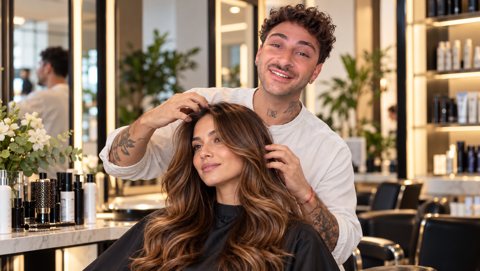 Haik Ovakimyan, hair stylist in Valencia: cut and colour matched to your face and skin tone
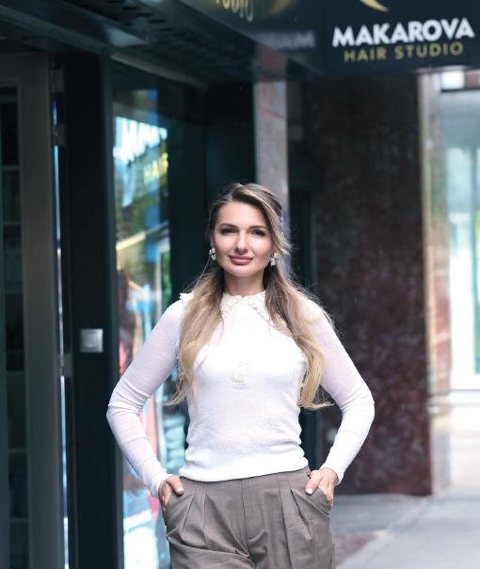 Hair extensions in Alicante and Valencia: Makarova Hair Studio
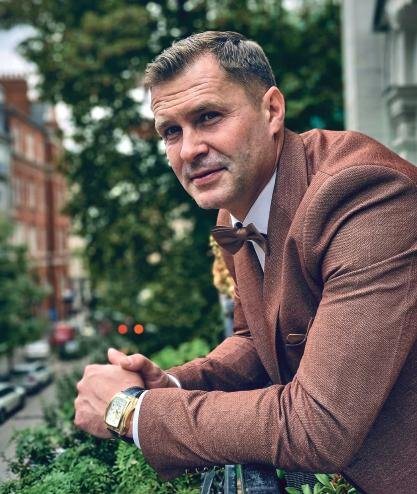 Alexander Podporin: health as a system and a Coral Club business in Spain