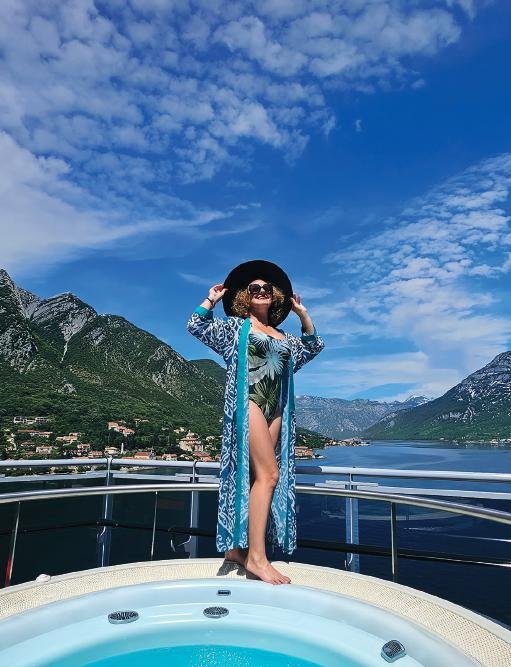
Fobia Escape and Action Gates: how an immigrant founder built escape rooms in Valencia for Spanish clients
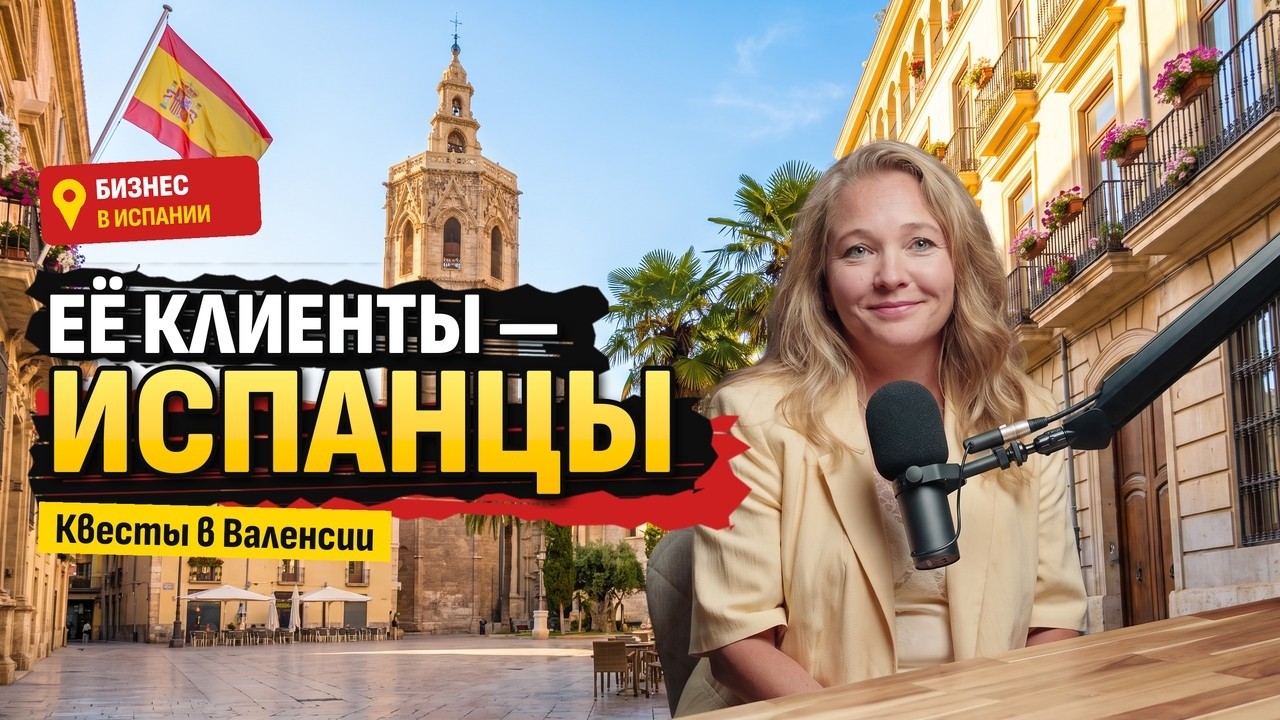
Alla Mavrina, co-owner of Fobia Escape Rooms and the team game Action Gates in Valencia, built her business for Spanish clients from day one. They are still her main customers. On the SunClub Network magazine podcast she talked about how her own business helped her settle in Spain and why she teaches her staff that “the experience starts at the door”.
Alla Mavrina, who features in this article, has advertised her escape rooms in print issues of SunClub Network magazine.

Alla Mavrina started building a business in Spain for Spanish clients when there were few Russian- and Ukrainian-speaking people in Valencia. Her Spanish was still shaky back then. Today she is co-owner and managing director of Fobia Escape Rooms and the team game Action Gates, and most of her clients are still Spanish. According to the project’s business page, it has been running in Spain since 2018.
Iuliia Medynskaia, publisher of SunClub Network magazine, recorded a podcast episode with Alla. We give Alla’s answers in her own words, translated from Russian with hardly any editing.
 7 min
Key moments
- 0:00 Our main clients are Spanish
- 0:12 What problem escape rooms solve
- 0:33 For adults or for children?
- 1:06 Escape rooms for team building: in an hour you see who’s who in a team
- 2:23 A game built around your company and brand
- 3:33 Building for Spanish clients from day one
- 4:36 Escape rooms: a fad or a niche of their own
- 5:09 What she changed in the Spanish market: “the experience starts at the door”
- 6:05 Media visibility as part of an entrepreneur’s job
In this article
Why the business was built for Spanish clients from the start
Iuliia asked her straight out where she found the nerve to start a business like this for Spanish clients. There were few Russian- and Ukrainian-speaking people around her, and her Spanish wasn’t very good yet. Alla said a lot of things came together, but above all she wanted something for herself:
“I really wanted to create some kind of project, so that the next stage in my life would be a project that would let me adapt here myself, as a person, and have some kind of voice, my own role in society.”
She says it worked, though it wasn’t easy: “We’ve taken plenty of knocks: it’s not that simple, building a project like this.” She chose her audience right at the start: “It really was made purely for a Spanish audience from the beginning, and we managed to win over Spanish clients. They’re our main clients.”
The project is still growing, and all the games can be played in Spanish, English and Russian. Why does a business that serves only its own community hit a ceiling, and how do you get into the Spanish market? We discussed it in the podcast episode “Serving only your own community: the main trap for entrepreneurs in Spain” (in Russian). Action Gates comes up there as one of the businesses featured in the magazine that have managed it.
“The experience starts at the door”: what Alla brought to the Spanish market
Iuliia asked whether Alla, as an immigrant, had influenced this niche in Spain. The answer was cautious: “I think so, and I hope so.” Alla admits they had no experience of creating escape rooms as such, so they looked for the quickest and best way to launch the project. In her view, something else set the tone:
“It was the quality we created for clients from the start, the way we treated them, the service, that set a certain tone.”
She passes this approach on to her team: “Besides the escape rooms and the product itself, I always say this and train all our staff in it: for us the experience starts at the door, meaning everything has to work together for the client.”
You can see what grew out of this on the project’s business page. The team writes that it keeps improving both the games and the whole guest experience, from first contact to how guests feel after the game. That is how escape rooms with actors, seasonal programmes and Halloween games that have become a tradition came about. Many clients come back and don’t stop until they have played every room and game. The team suggests reading reviews of its projects on Google and Tripadvisor.

Escape rooms in Valencia: a fad or a niche of their own
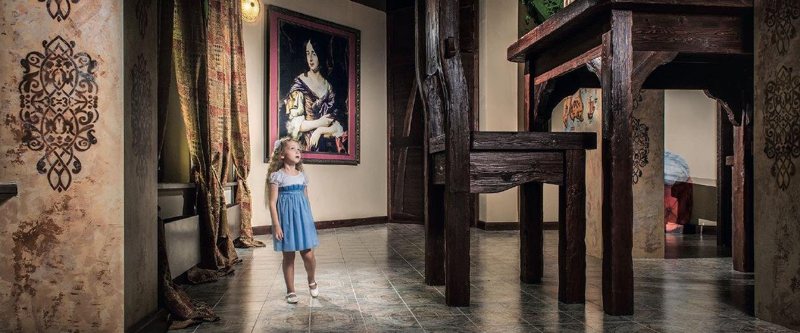
Alla explains in one sentence why people go to an escape room: “To escape from routine, to spend an hour in some other space, in another world.” All the games are designed for adults, and so are the puzzles, even in “Gulliver and the Giants”, which sounds like a children’s game. Children can play with adults in a mixed team, and some rooms are suitable from age six, others from age eight.
When Alla started out, there wasn’t much of this around. In her own childhood there was nothing of the kind: “I couldn’t go and do an escape room, there weren’t any.” The market has grown since then, but Alla doesn’t see it as a fad. Iuliia suggested the words “a clear niche”, and Alla agreed: “A clear niche in the market, yes. And I don’t think anything is going to change.”
What is changing, in her view, is the scale: “Formats are getting bigger: companies now try to build a whole space around the game.” Alla herself has two formats. Fobia Escape has four themed rooms for teams of 2 to 6 people. Action Gates, her newer project, takes groups of 4 to 48.
An escape room as team building: in an hour you see who’s who
Iuliia has played the games herself, and she asked whether companies come to Alla. They do. For team building in Valencia, a large group is split into smaller teams in the escape rooms. At Action Gates up to 48 people play at the same time. For Alla, these games are also a way of watching people:
“A game doesn’t let you play a role for long. In an interview, a job interview, at some meeting, we more or less know how to behave and what the right words are. But in a game you can’t keep that up for long.”
When time is short, there’s a task and something goes wrong, Alla says, “things about each person come out very quickly”. Hence her conclusion for managers: “An hour of play with us, I think, is worth several days of talking about teamwork and will show much more: how each person might behave in a team and who can be given which roles.”

A game built around your company and brand
The first thing Alla mentions is that a game master is always with the team during the game and runs certain parts of it. For a birthday, a celebration or a team-building event, the players can be given roles. You can go further: “We can create the whole game under the brand’s banner,” Alla says. Action Gates has a quiz task, and the team prepares questions about the company itself for it.
Sometimes the client comes with an idea of their own. Alla explains: “Sometimes companies come to us with ideas where they want to work in certain team members, particular personalities, somehow, or certain team roles that are already set.” In those cases the team goes along with it and builds the game around the client. The business page adds one more thing: the format can be adapted for guests with disabilities.
If you’re booking a game for your team, Alla’s story shows what to discuss in advance. That means roles for the players, questions about the company and, if needed, branding.
Media visibility as part of an entrepreneur’s job
At the end, Iuliia asked Alla to say in one sentence what media visibility means to her. Alla said: “Now, I think, it’s simply one of an entrepreneur’s duties. It’s something you can’t afford not to do any more.”
She used to think differently: “For a long time I thought it was enough to create a good product, people would hear about it, and to keep the bar high, keep up the standard. That’s true, but it’s not enough any more.” Now Alla is working on this side of the business. She has no wish to become a blogger, she says. She wants “the business, our project, to have an even more human face”.
Why an entrepreneur in Spain needs a magazine, a podcast and social media is covered in detail in “Personal branding for entrepreneurs in Spain”. If you’d like to play Alla’s games yourself, the rooms and formats are described in “Escape rooms in Valencia in English”. The project’s websites and contact details are on the Fobia Escape & Action Gates business page in the SunClub Business directory.
Frequently asked questions
Can a foreigner build a business in Spain for Spanish clients without fluent Spanish?
Alla Mavrina started when her Spanish was still shaky, and from day one she built the project for a Spanish audience. Spaniards are still her main customers. It wasn’t easy: in her words, the team has taken “plenty of knocks”.
Is an escape room good for team building in Valencia?
Yes. At Fobia Escape a large group is split into teams of up to 6 people, and at Action Gates up to 48 people play at once. Alla believes an hour of play shows more than several days of talking: how each person behaves in a team and who can be trusted with which role.
Can you have a game made for your company?
Yes. Players are given roles, the quiz task at Action Gates includes questions about the company, and the whole game can be branded. Companies sometimes suggest which employees and team roles to work into the game.
What languages are the games in?
All Fobia Escape and Action Gates games can be played in Spanish, English and Russian.
What does “the experience starts at the door” mean?
It means that besides the games themselves, everything has to work together for the client. That is how Alla trains her staff. In her view, the way guests are treated and served is what set the tone for her project in the Spanish market.
This version of the article was translated from Russian with the help of AI.
SunClub Business directory

Fobia Escape & Action Gates
Escape rooms · team games · team building · celebrations
- Where
- Valencia
- Languages
- Russian, Spanish, English
SunClub Business is the directory run by SunClub Network magazine: 240 businesses and professionals in Spain. The editors review every business page before it goes live. Browse the directory →
 Escape rooms in Valencia in English: Fobia Escape Rooms and Action Gates
 Personal branding for entrepreneurs in Spain: why an expert needs a magazine, a podcast and social media
 How Oleg Grechko built Sfero Real Estate, an estate agency in Valencia
 Àlex Roca: the marathon runner with cerebral palsy who spoke in Valencia