Personal branding for entrepreneurs in Spain: why an expert needs a magazine, a podcast and social media
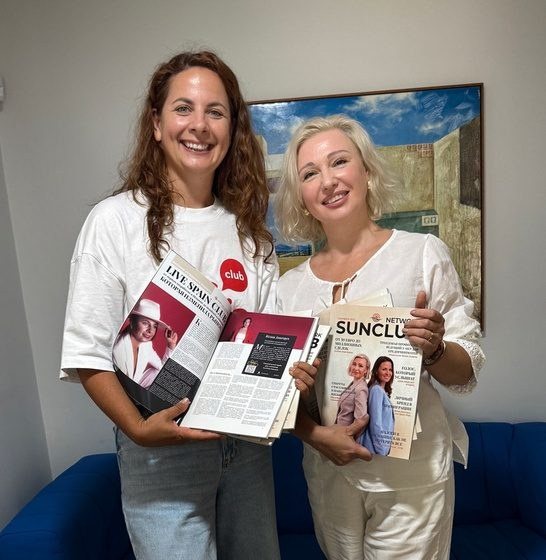
Bjarka, Iuliia Medynskaia and Yulia Dmitruk answer four questions: why a real expert in Spain can stay invisible, why one channel is not enough, why a print magazine still works as a mark of status and when media starts to bring in money. At the end, the joint Power Media offer: a magazine spread, a strategy session with all three and an interview in the Live Spain Club podcast studio.

- Bjarka Elena Kisiura – co-founder of SunClub and editor-in-chief of SunClub Network magazine
- Iuliia Medynskaia – co-founder of SunClub and publisher of SunClub Network magazine
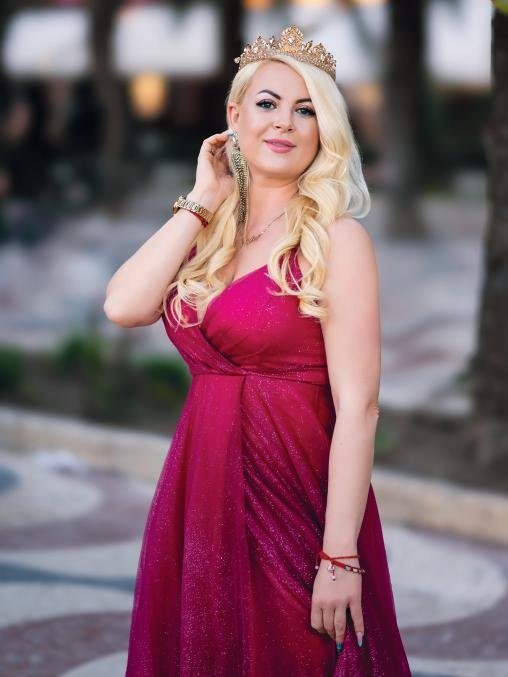
- Yulia Dmitruk – entrepreneur, founder of the Live Spain Club media platform
In this article
When did you realise that after moving abroad you can be a real expert and still remain “invisible”?
Bjarka: Back home I was known as an expert in marketing and content, people recommended me, my diary was booked up months ahead. Here in Spain it became clear that I would have to start from scratch.
I understand that a client will choose the person who has already “been seen”, the one whose product is already packaged and set out on the shelves of different media: print, digital and live events.
In a new country we have no “social capital”, no store of trust, so it has to be built. And the faster and more systematically, the better. You need to build your own strategy for being everywhere and start putting it into practice, so that you become a visible specialist people seek out.
Iuliia Medynskaia: When I saw how many seriously good professionals had arrived with enormous experience behind them and were somehow waiting for their past achievements to be recognised. In a new country it does not work like that.
You can be a genius, but if you are not part of the local conversation or the community, then for this market you simply do not exist.
I see many people losing time while others, less experienced but more visible, take their clients. That is the most dangerous trap: thinking that expertise matters more than visibility.
After a move, you have to prove your status here and now. Otherwise you remain a brilliant specialist nobody has heard of.
Yulia Dmitruk: My business partner and I were real experts at an immigration agency. And just before lockdown came the turning point: we realised we had been in business for a long time, four years already, yet our client base was barely growing. We worked steadily in immigration, social integration and training, but cold leads, meaning new people, were not finding out about us.
That was when we took a course for the first time and started posting on Instagram very actively and putting ourselves out there. From the end of 2019 that strategy became decisive, because we understood our service could be offered to people already in the country, not only to those who were about to move.
Why is one channel, whether Instagram, word of mouth or recommendations, not enough?
Bjarka: To create a full, clear picture, you have to show every facet, every side and every advantage of working with you. A purchase is always a decision based on emotion plus logic plus social proof.
- Instagram is a shop window that moves past your target audience at a rate of one post every three seconds. If they have not understood “who you are”, they will not stop to work it out.
- Word of mouth and recommendations are powerful and very warm, but you cannot control them. I never pin my hopes on them. Yes, it is nice when it happens, it is a huge bonus, but I am used to managing my business processes myself, and word of mouth does not scale.
That is why you need several promotion channels.
Iuliia Medynskaia: Because after a move, one channel is far too shaky a structure. Back home, word of mouth worked for us for years, and it stayed at home.
Instagram is great, but it is only one point of contact, and it gets lost easily in the feed. To build a real brand you need a “layer cake”. When a client sees you in a magazine, then hears your podcast, then meets you at an event, a picture forms in their head: “Oh, this person is everywhere, they’re a serious player.”
If you rely only on word of mouth or only on social media, you slow your growth down enormously and risk never reaching the people who are used to trusting proven, high-status sources.
Yulia Dmitruk: We are living in a time of Instagram noise. There is so much content that many people deliberately stop looking for an expert or following anyone on Instagram.
That is exactly why the more points of contact you have, the more channels you are on, the easier and faster it is to build a loyal audience.
If a client is tired of Instagram, they go to Telegram or to longer content on YouTube.
If they want something they can touch, they pick up a magazine. And if there is enough information about you, they move offline, to a networking event. That is how deals get done.
Why does a print magazine still work as a mark of status?
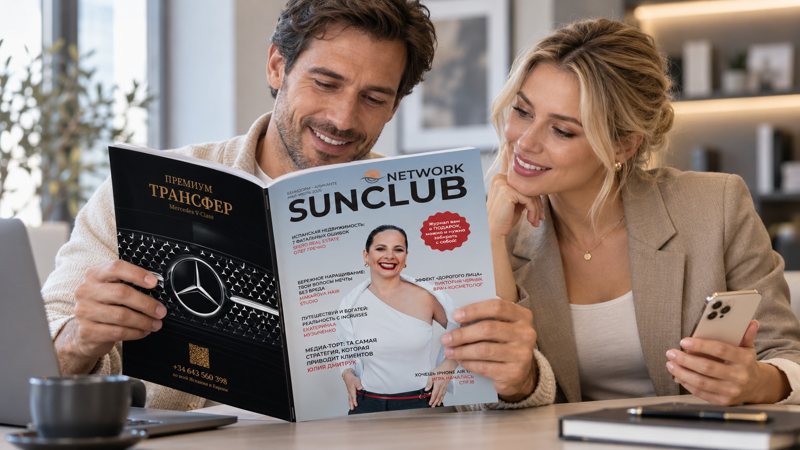
Bjarka: Because print media is an archetypal symbol of success and exclusivity. The subconscious link is very simple: if you are in print, you have been chosen as a leading voice in your niche.
The message changes from “I said this about myself” to “a prestigious publication is telling thousands of people about me”.
I think of our magazine as a real book. First, because I write 90% of the articles myself, and second, because we are creating a chronicle of brave entrepreneurs whose stories inspire us.
And psychologically, with a magazine the reader is in an attentive, trusting frame of mind.
Iuliia Medynskaia: Because print is a kind of verification. In digital, anyone can now call themselves anything, and it costs nothing.
A magazine is expensive and tangible, something you can hold in your hands.
When someone sees you in print, something clicks subconsciously: “If they’re in here, they’ve passed a quality filter.” A social media story vanishes after a day. Print is slow content that can work for years on tables in top venues.
A magazine moves you straight from the category of “some specialist from social media” into the high-status category. It is physical proof of your standing, and it cannot simply be scrolled or swiped past.
Yulia Dmitruk: I think print publications are the one format that will most likely never die. People wrote off radio too when television appeared.
Whatever anyone says, there is an audience that deliberately keeps using one particular media channel and no other.
So for me, print is about status, about the wish to put your business success story on record. And for my clients who come to me for the podcast, it is one more powerful tool of influence.
When does media stop being “about recognition” and start affecting how much money you make?
Bjarka: When media starts shortening the client’s path to a purchase. Saw → heard → felt → checked → bought. If there is a gap anywhere, the decision is put off “until later”. And “later” almost always goes to a competitor. Why wait, if you can buy now from someone who is visible, easy to understand and everywhere you look?
When your media presence is built properly, you are compared on price less often, people trust you before the first meeting, clients arrive already “warm”, you are recommended as the best in your field, and you choose your clients rather than the other way round.
Your moment comes when you stop being “an option” and become a brand.
Iuliia Medynskaia: Media starts affecting your income the moment reach turns into trust. Recognition is when people simply know your face. The money starts when they come to you ready to buy.
When someone has read your interview in the magazine and then seen your podcast, all their objections fall away. They no longer ask: “Why is your price so high?” They understand what status and what expertise they are paying for.
Once you have built that chain, media stops being a cost line and becomes your main profit generator, because in this market trust is the most valuable currency there is.
Yulia Dmitruk: My former business partner and I earned our first money through media within two weeks. All we did was tell people who we were and what we were selling. And at the time it was very easy. That was five years ago, of course.
In 2026, media means more than a personal brand and positioning. It means an expert or a business being present across several channels and in the market, with a firm stance on various issues.
That is what makes the difference between “I know her, and that’s exactly why I’ll buy” and “I don’t know her, so whatever results you show me, I won’t buy”. That is what monetisation through media is.
Frequently asked questions
What is media visibility, in simple terms?
It is when people know you and trust you before the first meeting. They have seen you in a magazine, heard you on a podcast, met you at an event, and they already see you as a specialist. The money comes when recognition turns into trust.
How does an expert build a personal brand in Spain?
By being in several places at once: on social media, in a print magazine, on a podcast and at live events. After a move, one channel is too shaky. Old recommendations stayed back home, and a post in the feed drops out of sight quickly.
Why is Instagram alone not enough?
People scroll the feed at a rate of one post every three seconds. If someone has not understood who you are, they will not stop to work it out. Word of mouth works, but it cannot be managed. That is why an expert needs several channels.
Why does an expert need a print magazine?
Print works as a check: if you have been written about, you have been chosen. A magazine sits on tables for months, and it cannot be swiped past like a story. People take their time over it and trust what they read.
When does media start bringing in money?
When it shortens the client’s path to a purchase: saw, heard, felt, checked, bought. Clients who have taken that path arrive warm and argue less about price. Yulia Dmitruk recalls that her first money through media came within two weeks.
The Power Media special offer
A spread in SunClub Network magazine
- A two-page spread
- Professional text written by the editorial team
- A session to draw out your expertise and a content plan for 3 months
- PR on SunClub’s Instagram and Telegram: stories, reels, a live broadcast with you
The magazine becomes your VIP calling card, and you become a leading voice in a prestigious print publication.
Strategy session, 3 in 1
A joint brainstorm with:
- Yulia Dmitruk (social media, PR, business promotion)
- Bjarka (positioning, content plan)
- Iuliia Medynskaia (marketing, personal brand packaging, sales)
2 hours online, and you receive:
- a document, “Step-by-step promotion strategy for 3 months”
- a list of ideas for reels
- profile optimisation
- positioning
- a media plan
- ideas for collaborations
- content recommendations
Premium interview (Live Spain Club)
- Filming in the podcast studio
- Editing
- Question preparation
- Cut into 30 reels
- Publication on YouTube (44k) and Instagram (19k)
- A personal recommendation
You get remarkable reach and recognition with the local audience straight away.

This version of the article was translated from Russian with the help of AI.
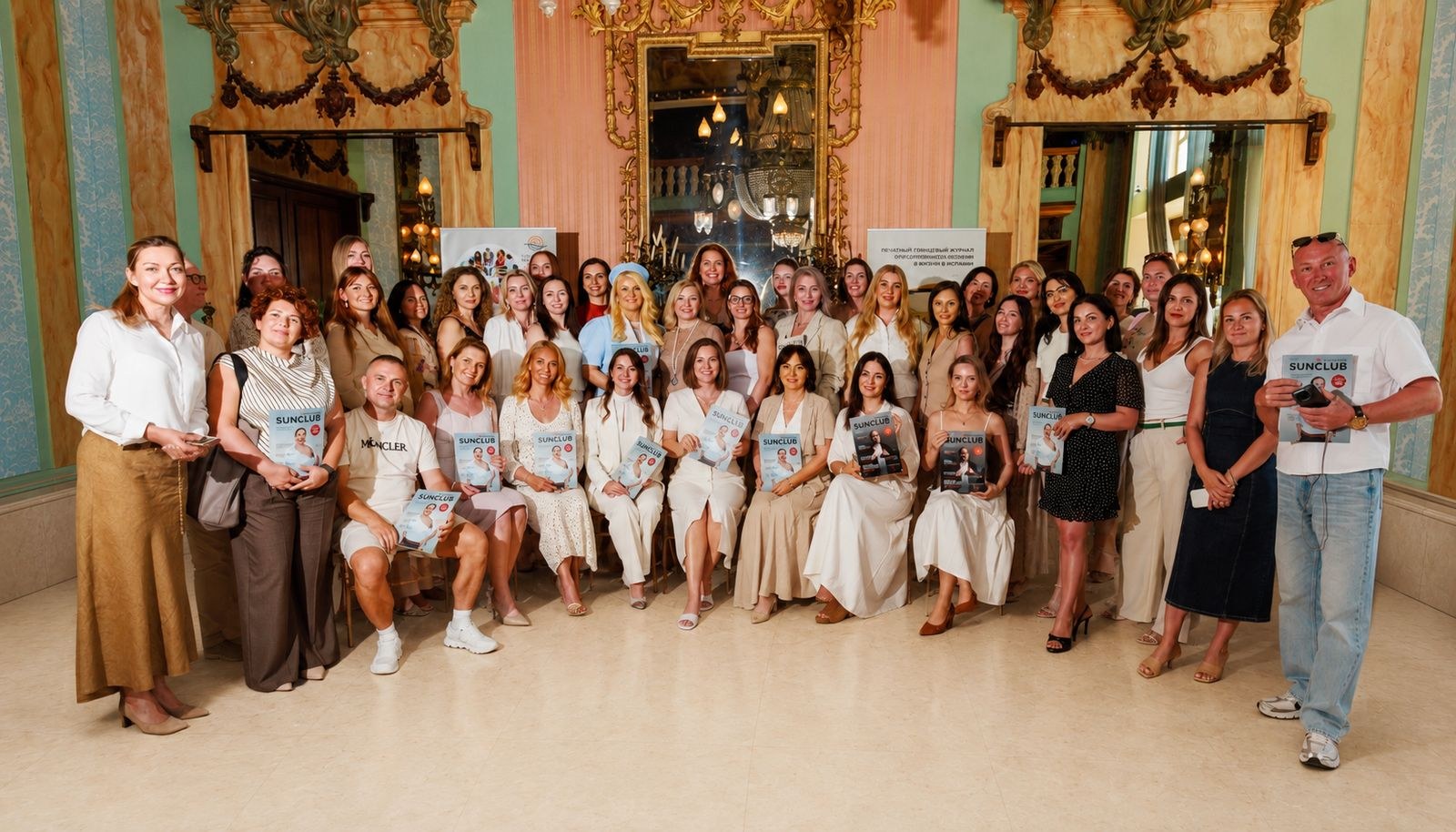
SunClub Business directory

Live Spain Club
Media about life in Spain: a YouTube channel with 44 thousand subscribers and an Instagram account with 20 thousand. Interviews, reviews and advertising for businesses and experts.
- Where
- Alicante
- Languages
- Russian, Ukrainian, Spanish, English
SunClub Business is the directory run by SunClub Network magazine: 240 businesses and professionals in Spain. The editors review every business page before it goes live. Browse the directory →
 Advertising in Spain for the Russian-speaking audience: how Yulia Dmitruk built Live Spain Club
 How to promote your business locally in Spain: social media, live events and a print magazine
 How to build a personal brand in Spain: an interview with Yulia Repetskaya
 Magazine or Instagram: how to build a personal brand as an entrepreneur in Spain