How to promote your business locally in Spain: social media, live events and a print magazine
Three experts, three layers of one promotion strategy. Yulia Dmitruk on why every social network is a separate shop and how one video covers five platforms. Iuliia Medynskaia on how 15 minutes of real conversation at an event replace six months of warming up in stories. Bjarka on why a print magazine matters when a post lives 48 hours and an article sits in waiting rooms for six months.

Three experts on how to build a promotion strategy that actually sells.
Layer 1. Being present online
Yulia Dmitruk – entrepreneur, founder of the Live Spain Club media platform
“Why be online?” is no longer a question. It is like asking why you would open a shop on a street where people walk past. Everything to do with showing yourself is selling: your business, your expertise, your product, you. And here is what matters right now: every one of your social networks is a separate shop.
Instagram is a shop. YouTube is a shop. Telegram is a shop. TikTok is a shop. Threads is a shop. And if you, as an expert, a business or a product, do not treat each of these platforms as an entry point for a new client, then there is no point talking about multichannel presence or growing your traffic.
Five to seven years ago, social media was a tool for “making yourself known”. You appeared, and that alone gave you visibility. Now it is a different story. Now, if you are missing from some point of contact, people may simply not know your product exists. This is no longer about recognition; it is about existing on the market at all.
Look at how it works in practice. A woman wants to book a beauty salon. She has several options. She picks the one where she knows the owner, has a sense of the staff, has seen the quality of their work, has noticed collaborations with people she trusts. That is all. No magic, just trust accumulated through many points of contact. And that trust is not built on one brilliant post. It is built on presence.
So today everything works as a funnel of contacts. A loyalty funnel rather than a sales funnel. And the more “shops” your product is stocked in, the more chances a person has to get to know you, warm to you and, in the end, buy.
I hear it from experts: “But I’m on my own, I have no team, no social media manager, no camera operator.” Fine, let’s be honest. When I started my immigration business with a partner, for four years we had no team, no dedicated content person and no professional filming. We simply took one type of content and duplicated it across every available platform. One video, five shops. That is it.
You do not need to create 50 unique formats for 50 different platforms. That is the story of big brands with marketing departments that adapt the message to the language of each audience. As an expert, you can start with one visual message and simply distribute it. The main thing is to start.
So here is the question I want to leave you with. Think about it right now: how many “shops” are you the director of today? And do you give each of them your time? Because only you decide how far you limit yourself.
Layer 2. Being present at live events
Iuliia Medynskaia – co-founder of SunClub and publisher of SunClub Network magazine
Here is what happens to every one of us when we move abroad. We arrive with a wealth of experience, expertise and reputation. And here we become socially bankrupt. We have none of the credit of trust we had at home. The kind that was built up over years through face-to-face contact, through recommendations, through “I know this person personally”.
And many people make the same mistake: they start looking for a magic button. Preferably just one. A universal one. “I’ll get into a magazine, and tomorrow there’ll be a queue.” “I’ll shoot a reel and wake up famous.” “I’ll switch on targeted ads and the clients won’t stop coming.” The truth is that no such button exists. It never has and never will.
What exists is the effect of presence. And in this multilayered media cake, events are one of the shortest routes straight to a person. Let me explain why.
When you run an Instagram account, you are a flat card on a phone. Even with wonderful content, beautiful reels and clever captions, you are still a two-dimensional object on a screen. But when you walk into an event room, everything changes in an instant. People read you automatically, without thinking: how you carry yourself, how you speak, what energy you give off, how you look at the person you are talking to. In 15 minutes of real conversation, over one cup of coffee, you cover a distance that takes six months of warming up an audience in the digital space. That is not a metaphor. It is the real mechanics of trust.
And here is how it works in a client’s head. They see you in a magazine and register your status. Then they hear your voice on a podcast, see you in stories, notice you in a reel. Then they come to an event and meet you in person. They shake your hand. They look you in the eye. And at that moment it all comes together into a single picture: she is real, she is seriously here, she is the same as on social media. The distance disappears. That is the “collapse” into trust that no advertising budget can buy.
But there is one more thing, which gets mentioned less often. Live events are a content factory for all the other layers of your media cake. At an event you create social proof: photos with opinion leaders, behind-the-scenes shots, new contacts, collaborations. You are literally feeding your online presence with what you create offline. The layers soak into one another.
One entrepreneur said to me recently: “All your events are a vanity fair.” You can look at it that way, of course. I look at it differently. It is an investment in social capital. And deals are closed not only on stage; they are closed in the corridors, over networking, once a person has felt your scale in real life and is ready to move forward.
In Spain, and in Europe as a whole, personal contact decides everything. Among locals and among immigrants alike. An event is not a society column; it is a way out of invisibility and into the real market. And it is a step worth taking.
Layer 3. Being present on the pages of a print magazine
Bjarka Elena Kisiura – co-founder of SunClub and editor-in-chief of SunClub Network magazine
Think about this: a post on social media loses its reach after 48 hours. The algorithm has done its job, the feed has refreshed, the post has sunk. That is it. A magazine, on the other hand, lies in a reception area, on a coffee table, in a coworking space, in a clinic’s waiting room, and people pick it up again and again. One piece works for six months with no further spending. That is a fundamentally different logic of presence.
But let’s be honest: many magazines really do not work. Because the print run is small, or the quality does not inspire anyone to pass it on, or there is no continuation, neither online nor at the region’s major events. A publication for the sake of a publication is money thrown away. A magazine works only when it is part of a system. When it is one of the layers of that media cake we are talking about.
Here is what happens when the system is built properly. A person sees your article, and that is the first signal: serious, high-status, worth attention. This is no longer “someone on the internet” but a person who has been written about in a magazine. Psychologically it works differently from any digital content, because this is the language of premium. When people hold the magazine in their hands and see your feature, they automatically perceive you as an opinion leader. In effect, your article is your VIP business card.
We already have feedback from residents: they sign autographs on their own articles. That is a real marker of how the perception of an expert changes after publication. A conversation at the negotiating table no longer starts with “tell me about yourself” but with “I read your article”. And that removes 80% of the need to sell yourself. People already know you, which means the foundation of trust has already been laid.
Bear in mind that targeted advertising says “buy, buy, buy”, while a magazine article says “this is who this person is, this is why they do what they do, and this is why you can trust them”. People buy from those they understand. Your story on our pages gives them that understanding faster than any other format.
A magazine feature is also fuel for an entire content factory: posts on social media, a new line in your bio, a mention in your presentation, an addition to your credentials, a live broadcast with the editorial team. You get an asset that is used again and again over several months. And we teach our residents an effective post-release, because knowing how to “multiply” one publication into a dozen formats is a skill in itself, and it increases the return many times over.
One more thing that is often underestimated. A magazine is physically there in the places where phones stay in pockets. A business dinner, a conference, a gift for a client, a folder of documents for a partner. It is the only physical media format that turns up in the right place at the right moment.
Publishing in print is not about admiring yourself, as some people think. It is a promotion strategy for an overheated market where nobody knows you, and after a move that is doubly true. Those who publish in print media now will be the market leaders tomorrow. Because they are already laying the foundations while others wait for a magic button.
Frequently asked questions
How do you promote your business locally in Spain?
In layers. The first layer is social media, where every platform works as a separate shop. The second is live events, where trust is born in 15 minutes of conversation. The third is features in a print magazine, which work on your status for months.
Do you need to run every social network at once?
You can start with one video and post it on five platforms. That is how Yulia Dmitruk ran her business for four years without a team or a camera operator. Separate content for each network is what big brands with a marketing department do.
Why go to events if you have Instagram?
On a phone you are a flat picture. In person, people see how you carry yourself and how you speak. In 15 minutes of conversation over coffee you cover a distance that takes six months of warming up online. And the photos and contacts from the event then feed your social media.
Does advertising in a magazine work?
It works when the magazine is part of the plan: it has a decent print run and a continuation online and at events. A post in the feed loses its reach after 48 hours, while a magazine sits in reception areas and coworking spaces for six months. After a feature, a conversation at a meeting often opens with the words “I read your article”.
What do you do with the article once the magazine is out?
Multiply it: posts on social media, a line in your bio, a slide in your presentation, a live broadcast with the editorial team. We teach residents this kind of post-release, because one publication can work for several months.
SunClub Business directory
SunClub Business is the directory run by SunClub Network magazine: 156 businesses and professionals in Spain. The editors review every business page before it goes live. Browse the directory →
Add your business to the directory: a basic business page is free →
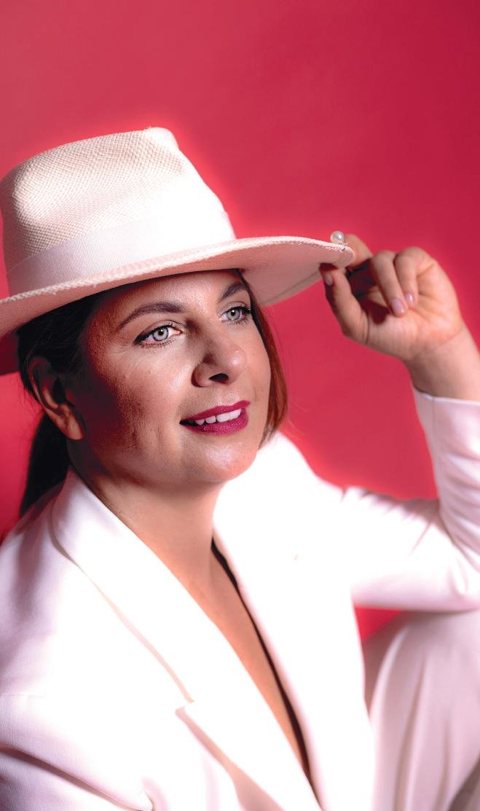 Advertising in Spain for the Russian-speaking audience: how Yulia Dmitruk built Live Spain Club
 Personal branding for entrepreneurs in Spain: why an expert needs a magazine, a podcast and social media
 Generative engine optimization: how to get ChatGPT to recommend your business in Spain
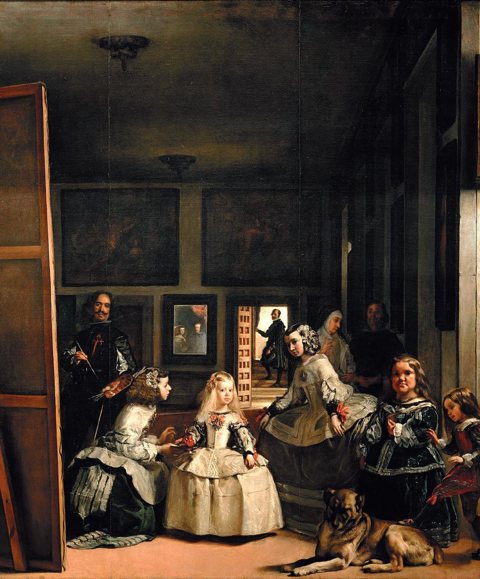 Las Meninas by Velázquez: the meaning behind the painting and where to see it in Madrid