Inheritance and gift tax in Spain: what children pay and how to avoid losing the flat
On the Live Spain Club podcast, lawyer Igor Lapchynskyi explained how not to miss the deadlines and how not to lose a flat left to your children. We used Valencian law to work out what children, non-residents and people receiving money from their parents pay.

In Spain, inheritance tax is paid by the person who receives the flat or the money, and how much they pay is up to the region. In the Comunitat Valenciana, the Valencia region, children, spouses and parents get a 99% reduction on the tax as of November 2026, but only if they file the return on time themselves. Tax lawyer Igor Lapchynskyi explains how it works and when a flat can end up with the state, in part four of the “Taxes in Spain” series on Yulia Dmytruk’s YouTube channel Live Spain Club (the episode, in Russian). We checked the figures against the laws published in the BOE, Spain’s official state gazette.
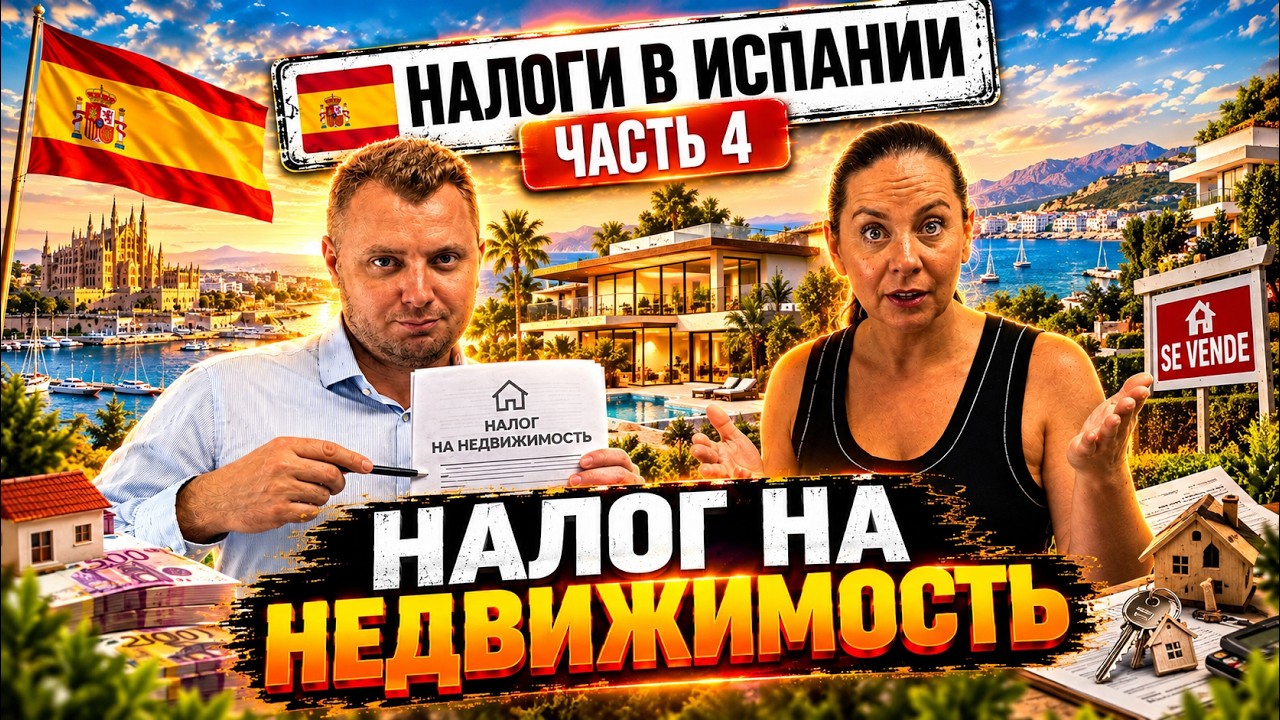 52 min
Key moments
- 0:00 Bought property in Spain: what taxes come next?
- 1:08 Taxes when you buy property
- 2:40 IBI: the tax you pay every year
- 3:53 Parking spaces and several cadastral references
- 4:16 Non-residents and letting property
- 5:12 Main home and second home
- 6:46 A tax break mistake when buying
- 8:20 Case study: buying property to resell
- 10:11 Tax deadlines and penalties
- 11:20 Example: a €400,000 flat
- 12:08 What your IBI depends on
- 14:13 Land in Spain: what you need to know
- 15:05 Urbanizable and rústica land
- 18:05 Illegal buildings and fines
- 18:35 Cadastral references
- 22:30 A €400,000 flat: the tax if you live there, let it or just visit
- 24:15 Several flats and wealth tax
- 26:01 How to cut your tax bill legally
- 31:26 Inheriting property in Spain
- 34:55 Planning an inheritance
- 36:44 Gifting property and money
- 40:53 The tax break on gifts to children for a first home
- 41:43 How to get property ready for your children in advance
- 47:37 Quickfire: the most common mistakes
- 51:28 The big question
In this article
At a glance: inheritance and gift tax in Spain in 2026
- The tax is paid by the heir or by whoever receives the gift. Rates and allowances are set by the regions, and the general state scale runs from 7.65 to 34%.
- In the Comunitat Valenciana, children, grandchildren, spouses and parents get a €100,000 allowance and a 99% reduction on the tax, for both inheritances and gifts.
- The inheritance tax return (Modelo 650) is due within six months of the death, and the gift tax return (Modelo 651) within one month in Valencia.
- A flat is valued at its valor de referencia, the reference value worked out by the Spanish cadastre (Catastro).
- Non-residents pay under the rules of the region where the deceased lived or where most of the assets are.
- On top of this, the heir pays the plusvalía municipal, a local tax, to the town hall.
SunClub Business directory
Professionals in this field in the SunClub Business directory
 Live Spain ClubMedia about life in Spain: a YouTube channel with 44 thousand subscribers and an Instagram with 20 thousand. Interviews, reviews and advertising for businesses and experts.Alicante · Russian, Ukrainian, Spanish, English
 Legal servicesProfessional legal services in Spain. Processing and renewal of all types of residence permitsRussian, Ukrainian, Spanish, English
SunClub Business is the directory run by SunClub Network magazine: 271 business or professional in Spain. The editors review every business page before it goes live. Real Estate & Investment in the directory: 19 →
Add your business to the directory: a basic business page is free →
Who pays inheritance tax in Spain and what the amount depends on
Lapchynskyi names three things you need to know before the tax can be calculated: which country the heir is tax resident in, which Spanish region they live in and how closely they were related to the deceased. “Once we have all these factors, we can calculate the tax,” he says.
The inheritance and gift tax law (Ley 29/1987, known as ISD) sorts relatives into four groups. Group I is children and grandchildren under 21. Group II is children and grandchildren aged 21 and over, spouses and parents. Group III is brothers and sisters, nephews and nieces, uncles and aunts, and relatives by marriage, such as a mother-in-law or a stepson. Group IV is everyone else.
A spouse is in Group II, along with adult children. In the Comunitat Valenciana, couples registered as uniones de hecho, civil partnerships, are treated the same as spouses.
Asked whether a biological child pays less tax, Lapchynskyi answered: “It’s the same for everyone.” The law makes no distinction between biological and adopted children. The only difference is age: in Valencia, a child under 21 gets an extra €8,000 of allowance for every year they are short of 21.
A flat is valued at its valor de referencia on the date of death, or at the declared price if that is higher. You can look up your own figure free of charge on the Catastro website. So when asked whether the tax is worked out on the €500,000 the flat would sell for, Lapchynskyi replied: “That’s a different amount.”
How much is inheritance tax in Spain: an example from the Comunitat Valenciana
As a rough guide, Lapchynskyi suggested 5 to 7% of the whole taxable base, “but again, it depends on the region”. That guide is for regions without big reductions. In Valencia, children and spouses get a 99% reduction, so let’s do the sums under the Valencian law, Ley 13/1997.
Say an adult son is the sole heir to the flat his father lived in, with a valor de referencia of €600,000. He can deduct €100,000 for the family relationship and 95% of the value of the deceased’s home, capped at €150,000. That leaves €350,000 to be taxed, which comes to €68,628 on the scale. The 99% reduction brings the bill down to about €686. He keeps the home allowance as long as he does not sell the flat within five years.
A brother or nephew gets a 25% reduction, rising to 50% from 1 June 2027, and everyone else gets none. Other regions have their own allowances and reductions, and the same example would come out differently in Catalonia or Madrid.
Six months to file, and what happens if you are late
“You have six months to accept the inheritance and get the process started,” says Lapchynskyi. Within those six months of the death, you file the return and pay the tax. If you ask within the first five months, the deadline is extended by another six, with interest for the delay.
In Valencia, a great deal hinges on this deadline. The 99% reduction only applies to the assets the heir has declared on the return of their own accord. If you file late but before the tax office writes to you, there is a late-filing surcharge, but you keep the reduction. If the tax office gets there first, the tax is calculated without the reduction and with a penalty.
If you do not have the money to pay the tax, Lapchynskyi advises asking for a deferral or for payment in instalments.
Plusvalía municipal on an inheritance
Besides inheritance tax, there is a municipal tax on the rise in value of the land under the flat. On an inheritance the heir pays it, filing a return with the town hall within six months, which can be extended to a year. The town hall can give children, spouses and parents a reduction of up to 95%, and you will find the exact figure in your town’s tax bylaw (ordenanza fiscal). If the land has not gone up in value while it was owned, there is no tax to pay.
Inheritance tax in Spain for non-residents
An heir who lives abroad pays tax in Spain under the rules of the region where the deceased lived. If the deceased was a non-resident too, it is the region where most of their Spanish assets are. So a son in Berlin or Kyiv gets the same allowance and the same 99% reduction on a flat in Valencia as a son living in Valencia. He files his return with the state tax agency, AEAT.
Lapchynskyi advises heirs abroad to find out in advance what inheritance tax their own country charges, what its tax treaty with Spain says and which assets are best passed on in which way. About Andorra, which has no such tax, he says: “When a country has no inheritance tax, that doesn’t mean you won’t pay anything in Spain.”
He advises looking for the clause on inheritances and gifts in the treaty. Spain has few separate inheritance tax treaties: as of November 2026 they are with France, Greece and Sweden. Either way, Spanish law gives a Spanish resident credit for tax paid abroad on an inheritance or gift (article 23 of the ISD law). Lapchynskyi’s example: the rate is 30% in Spain, you paid 15% there, so you pay the difference. Who counts as resident is covered in our article “Tax resident in Spain”.
Gift tax in Spain: money and property
A gift (donación) is declared on Modelo 651. In the Comunitat Valenciana the deadline is one month, and under the general state rule it is 30 working days. About people who forget to file, Lapchynskyi says:
“If you forget, I guarantee you 100% that the tax office will remind you, and the penalty won’t just be for the tax on the gift, it’ll also be for not filing the return.”
Gift tax on money in Spain
Lapchynskyi’s tip goes like this: “Parents can give their children up to 100,000 euros towards buying their first property,” and, depending on the child’s income, there is a 99% tax break, which means about €1,000 in tax. He was quick to add that it all depends on the region, and gave a strict version in which the tax break is tied to buying a first home.
In the Comunitat Valenciana, as of November 2026, the conditions are more generous, and the money does not have to go towards a first home. Children, spouses, parents, grandchildren and grandparents get a €100,000 allowance per donor over five years, and a 99% reduction on the rest. A €100,000 gift to an adult son carries no tax at all, and a €200,000 gift costs about €125.
The conditions are strict. The gift has to be made before a notary, and the deed must state where the money came from and how it was transferred. You can only do without a notary for amounts up to €4,000 over three years, by signing the document with a qualified electronic signature.
Gift tax on property in Spain
With a flat, there are more taxes. The person receiving it pays gift tax and the plusvalía municipal, and for gifts the law gives no 95% town hall reduction. The donor pays IRPF, Spanish income tax, on the difference between the flat’s value and what they paid for it. On an inheritance, this tax does not apply.
Lapchynskyi puts it like this: “Inheritance tax will always be lower than gift tax. As a rule, that’s the standard logic in Spain.” He adds that a gift sometimes works out better than an inheritance, and sometimes selling is the better option.
You can also lend your children money interest-free, “like an interest-free mortgage”, says Lapchynskyi. The loan has to be put in writing, otherwise it may be treated as a disguised gift.
When a flat can end up with the state, and why you need a will
“In some cases the state can take the flat, put it up for auction, sell it, keep part of it for the taxes and give part to the heirs,” Lapchynskyi said. He has seen a case like that in his practice, and another besides: a husband left everything to the children, and his widow is claiming the cuarta vidual, a quarter of the estate, because her standard of living has dropped.
Under the Civil Code, the state only inherits if there is no will, no spouse and no relatives up to the fourth degree, that is, up to first cousins. You can also lose a flat through debt: the tax office recovers unpaid tax by seizing assets and selling them at auction. An heir who was left out can challenge the division of the estate in court.
The cuarta vidual is a right under Catalan law. Valencia follows the general Civil Code, under which a widow with children gets a life interest in a third of the estate.
Which law applies to a foreigner is decided by the EU Succession Regulation: as a general rule, it is the law of the country where the person last lived. In your will you can choose the law of the country whose nationality you hold. Lapchynskyi says you should “definitely” make a will, and “the more detailed, the better”. In his view, having no will is worse than having a bad one.
What would Lapchynskyi do for his own future children if he owned a house in Spain today? “I’d think about what tax residency they’ll have in the future and set up the whole structure so that they pay as little tax as possible,” he replied. He also suggests considering whether to hold assets through a company, and dealing with gifts and inheritance early, “and not at the last minute”. For shares in a business, the Valencian 99% reduction does not apply if the company mainly holds flats.
What an owner pays on a flat every year, and on letting it out, is covered in our article on property taxes in Spain.
Frequently asked questions
How much is inheritance tax in Spain for children?
It depends on the region. In the Comunitat Valenciana, as of November 2026, children get a €100,000 allowance and a 99% reduction, so a son who inherits his father’s €600,000 home pays about €686.
Do non-residents pay inheritance tax in Spain?
Yes. A non-resident pays under the rules of the region where the deceased lived or where most of the assets are, with the same allowances and reductions. The return goes to the AEAT within six months.
How much gift tax is there in Spain on money from your parents?
In Valencia, a gift of up to €100,000 from one parent over five years carries no tax, and the rest gets a 99% reduction, provided it goes through a notary and Modelo 651 is filed within a month.
What happens if you miss the inheritance tax deadline?
If you file late but before the tax office writes to you, there is a late-filing surcharge and you keep the Valencian 99% reduction. If the tax office writes first, there is no reduction, and a penalty is added.
Where to find Igor Lapchynskyi
Igor Lapchynskyi is a tax lawyer and the head of Lapchynskyi Partners. He advises clients online and at offices in Barcelona, Valencia, Alicante and Andorra. Consultations are in Russian, Ukrainian, Spanish and English. He has already told our magazine when it makes more sense to be an autónomo and when to set up an SL.
- Website: igorlapchynskyi.com
- Instagram: @igor_lapchynskyi_lawyer
- Business page in the SunClub Business directory: Lapchynskyi Partners
You can watch the whole “Taxes in Spain” series on Yulia Dmytruk’s YouTube channel Live Spain Club. The channel is also on Instagram, @live_spain.club, and in the SunClub Business directory. Live Spain Club is a partner of SunClub Network.
If you run a business in Spain, for example helping families with paperwork, inheritances or property, people could be reading about you too. We write articles about entrepreneurs for the SunClub Network online magazine and for the print edition, which comes out in Russian and Ukrainian and is handed out free in Valencia and along the coast: 3,000 copies at more than 100 locations. In the SunClub Business directory you can set up a business page, and the basic one is free. We write about entrepreneurs in any language and from any country.
This article is for information only. It is based on the podcast episode of 18 September 2026 and was checked against the law as of November 2026. Tax rules change, so make decisions about your own situation after talking to a specialist.
This version of the article was translated from Russian with the help of AI.
SunClub Business directory
Professionals in this field in the SunClub Business directory
Live Spain ClubMedia about life in Spain: a YouTube channel with 44 thousand subscribers and an Instagram with 20 thousand. Interviews, reviews and advertising for businesses and experts.Alicante · Russian, Ukrainian, Spanish, EnglishLegal servicesProfessional legal services in Spain. Processing and renewal of all types of residence permitsRussian, Ukrainian, Spanish, EnglishSunClub Business is the directory run by SunClub Network magazine: 271 business or professional in Spain. The editors review every business page before it goes live. Real Estate & Investment in the directory: 19 →
Add your business to the directory: a basic business page is free →