“Customers for Life” by Carl Sewell: 7 rules for small businesses
Carl Sewell sold cars in Dallas and worked out that a loyal customer is worth around $332,000 to his business over a lifetime.
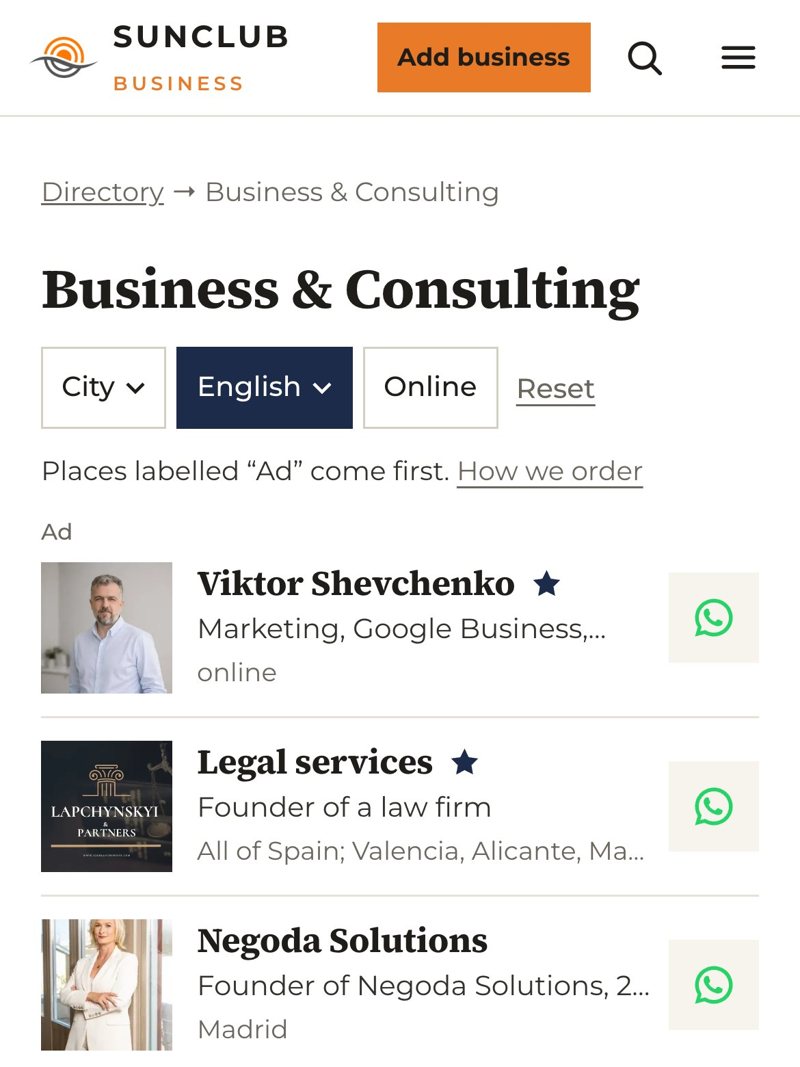
The SunClub Business directory and the Universe of Business game are made by the SunClub Network magazine team: the game was created and is run by the magazine's founders, Bjarka (Elena Kisiura) and Iuliia Medynskaia. Viktor Shevchenko, whose business page appears alongside this article, is a partner of the magazine.

In this article
What Customers for Life is about
Carl Sewell owned car dealerships in Dallas. In 1990 he and Paul B. Brown published Customers for Life. The book's central idea is simple: a business makes its money from the people who come back, and the first sale only starts the relationship.
Sewell worked out for himself what a single customer is worth. A man buys his cars, has them serviced at the same dealership, and brings along his wife and children. Over a lifetime, a customer like that brought Sewell's company around $332,000, at 1990 prices. With that figure in mind, small disputes look different: a row over a couple of hundred dollars can cost you hundreds of thousands.
Below are seven ideas our editors took from the book. The figures in the examples are our own, added to make things concrete.
Why some businesses keep customers while others keep hunting for new ones
Picture two beauty salons on the same street in Valencia. Similar prices, good stylists, attractive Instagram pages. The first salon is forever running ads and first-visit discounts. Its diary is either packed or empty, and as soon as the ads are switched off, the clients thin out. The second salon advertises too, but most of its bookings come from regulars and their friends.
The second salon keeps thinking about a client after she has paid. Sewell believed a business begins on the day a customer decides to come back.
1. Work out what a customer is worth over the years
A beautician does a treatment for €100. The client pays and leaves. Judged on that one visit, the business has earned €100. If she comes back once a month for five years, that's €100 × 12 × 5 = €6,000. And if she brings two friends who stay as well, the total grows further.
In marketing this is called customer lifetime value, or LTV. It's the amount a person brings a business over the whole time they keep buying. A precise calculation subtracts costs from revenue, but for everyday decisions a rough figure will do.
Now imagine the client didn't like the treatment. You could argue and refuse to redo it, because you'd rather not lose €100. Or you could remember that the person in front of you is worth €6,000 over the next five years. You don't have to refund every unhappy customer. But make the decision with that €6,000 in mind.
2. Before looking for new customers, find your old ones
When sales drop, the first thought is usually advertising: more Reels, more reach, more new people. Hardly anyone asks where the people who have already bought from them have gone.
Take a small business in Benidorm. Over a few years it has served 2,000 customers, and 300 of them buy regularly. Some of the other 1,700 have moved away, others have gone to a competitor or left unhappy. Many have simply forgotten about you. You've already paid to attract these people. They know you and may even trust you.
Before you spend another thousand euros on advertising, open your customer list. When did each person last get in touch? Were they happy? Do they know about your new services? Do they have a reason to come back?
An estate agent helps a family buy a flat in Alicante and collects the commission. That could be the end of it. Or, a couple of months later, the agent could ask how they're settling in, recommend a good handyman and tell them what's changing in the market. When the family wants to sell the flat, or their friends need help with a move, they'll remember the person who didn't disappear after the sale.
Contact former customers only when you have a real reason, and only through the contact details they gave you for that purpose: in Spain this is governed by data protection law.
3. Good service pays for itself
Many owners feel that service just eats into profit: extra staff, time spent on each customer, refunds, quick replies on messaging apps. Try looking at it from the other side.
A family has dinner at a restaurant and the bill comes to €120. One €20 dish wasn't right. The waiter argues: the plate is almost empty, and the chef is sure it was cooked properly. The restaurant keeps its €20, but the family won't be back. If they used to eat there six times a year, that's €720 a year and €3,600 over five years. An argument over €20 can cost the restaurant €3,600.
Following Sewell's logic, you need to count two figures: what good service costs you and what bad service loses you. The second one never appears in the accounts, so people forget about it.
This matters even more in Valencia, Alicante or Benidorm, where many customers come on a friend's recommendation and one happy family brings you new people for free. A family that feels badly treated will talk about you in those very same group chats.
4. Mistakes are forgiven if they're put right quickly
Take a small hotel on the Costa Blanca. The guests arrive late in the evening after a flight and find that their room has been given to someone else because of a booking error. The receptionist shrugs: “System glitch, there's nothing we can do.” He has explained the cause, but that doesn't make the guests feel any better.
Another receptionist owns up to the mistake, finds a free room or a hotel nearby himself, books a taxi and offers compensation. Same mistake, yet the guests leave with a completely different impression.
Customers want to know what will happen when something goes wrong. Will anyone answer? Will anyone listen? Will someone take charge and sort it out? A mistake that is well handled can even build trust. But if the same thing keeps happening, no amount of compensation will help.
What to do in your own business:
- let your staff solve routine problems without long chains of approval
- decide in advance when you will redo the work, give a discount or refund the money
- once a month, go through the complaints and look for where they come from
5. Keep your promises first, then surprise people
Marketing loves “wow” service: beautiful packaging, cards, little gifts. That's all nice. But say a designer promised a logo by Friday. On Friday there's no logo, nor on Monday, and on Tuesday an apology arrives with a discount. The discount takes some of the sting out, but the client will remember the missed deadline.
Sewell starts with the basics: do what you promised, and get it right the first time. Promised to call back tomorrow? Call back. Quoted €500? Don't let it turn into €750. If a deadline is slipping, warn the client early. If you're promising a result, make sure you and the client mean the same thing by it.
This matters most if you've only recently started working in Spain. Local customers don't know you yet, and you have few reviews and contacts. Every promise you keep is a small piece of proof that you can be relied on.
The order is: reliability first, then convenience, then pleasant surprises. A surprise without the first two almost never saves the day.
6. Make good service a system
Almost every small company has its own Marina. She remembers customers by name, knows who takes their coffee without sugar, always calls back and knows how to calm down someone who's upset. Customers adore her. Then Marina goes on holiday and the company seems to lose its memory: nobody knows who was promised a call back or why a regular client gets a special price.
So the good service depended on one person. Sewell writes at length about turning customer care into a clear routine that any member of staff can follow. For example:
- every enquiry gets a reply the same working day
- after placing an order, the customer gets a message explaining what happens next
- a few days later, the customer is asked whether everything is all right
- every complaint has someone responsible for it and a deadline
- the history of each customer's conversations is recorded in a CRM or a spreadsheet
Then quality no longer depends on a manager's mood. You don't need an expensive CRM for this. A small business can often manage with a shared spreadsheet of enquiries, a few message templates and the habit of writing down what was agreed.
7. Listen to the customer and look for the reason behind the request
You sell marketing services, and a client says: “That's too expensive, can you do it for less?” Your first impulse is to defend the price or offer a discount on the spot. Try asking first: “What are you comparing it with?” It often turns out the person thinks they're paying €1,000 for a few posts. In fact the price covers a promotion plan, shoots, copywriting and reports. Nobody had explained that to them.
Customers know very well what isn't working for them. The fix they suggest isn't always the best one. They ask for a discount when what they need is a clear quote. They complain about waiting too long for an appointment, when what needs changing is how bookings work. They ask for more updates because they aren't sure anyone is working on their order.
Look for patterns. If one person couldn't work out how to book a consultation, that's a one-off. If twenty people say so, change the process. Complaints work like a free audit of your business.
One last point: not every customer is right for you. If someone's demands clash with your contract, your rules or the interests of your other customers, be honest about where your limits are. Respecting customers means taking their needs seriously. It doesn't mean doing whatever they ask.
How to check your business in one evening
You don't have to rebuild everything at once. Start with three steps.
Take your list of customers from the last six months and count how many came back a second time. Look at who returns and who drops away, and try to understand why.
Go through the customer journey yourself, from the first message to the finished order. How long is the wait for a reply? Is it easy to book? Is the price clear? Is it obvious who to contact if something goes wrong?
Ask your regular customers three questions: what they find easy about working with you, what you could do better, and whether anything ever made them think twice about coming back. The answers are often more useful than expensive market research.
After that, keep an eye on three figures: how many customers came back, how often they buy and how many people came through a recommendation.
Why this matters if you run a business in Spain
When you've moved abroad, you have to build your reputation almost from scratch. People don't know you yet, the sales channels you're used to work differently, and customers speak another language and expect different things. Russian- and Ukrainian-speaking entrepreneurs in Valencia, Alicante, Madrid or Málaga often depend on word of mouth, where one happy customer brings in the next.
If dealing with you is easy and clear, if you keep your promises, stay in touch after they've paid and admit your mistakes, people stop looking for someone else and start sending others your way. That kind of reputation is something advertising alone can't buy.
Try asking yourself a different question. Instead of “How do I sell to this person?”, ask “What can I do so that they keep coming back to me for the next ten years?”
To help new customers find you too, create a free business page in the SunClub Business directory. The page appears in Russian, Ukrainian, Spanish and English, and you only fill it in once. Add your business to the directory.
Frequently asked questions
Who wrote Customers for Life?
Carl Sewell, who owned car dealerships in Dallas, together with Paul B. Brown. The book came out in the United States in 1990, and a Russian translation was published by Mann, Ivanov and Ferber.
What is the book about, in a nutshell?
It shows that a regular customer brings a business far more than their first purchase, and explains how to build the kind of service people come back to: keep your promises, fix mistakes quickly, listen to complaints and make customer care part of the way the company works.
What is LTV in simple terms?
LTV (lifetime value), or customer lifetime value, is the total a person brings your business over the whole time they buy from you. A beautician's client who pays €100 a month for five years brings in €6,000.
How can you keep customers without offering discounts?
Start with the people who have already bought from you: get in touch when you have a good reason and ask whether they were happy. Reply quickly, stick to your deadlines and prices, and go through your complaints. Customers come back to places where things are clear and dependable.
Is the book useful for a salon, café or private practice?
Yes. Sewell wrote about a car dealership, but the same rules apply to any business people return to: a beauty salon, a restaurant, an estate agency or a studio.
This version of the article was translated from Russian with the help of AI.
SunClub Business directory
Professionals in this field in the SunClub Business directory
 Viktor ShevchenkoMarketing, Google Business, YouTube, analytics and automation for businesses and educational projects.Russian, Ukrainian, Spanish, English
 Universe of BusinessA business game for teams and entrepreneurs: team building, training and a review of your own business. At the end, everyone leaves with a list of steps and dates.Valencia · Russian
SunClub Business is the directory run by SunClub Network magazine: 246 businesses and professionals in Spain. The editors review every business page before it goes live. Education & Personal Growth in the directory: 25 →
Add your business to the directory: a basic business page is free →