MDI International College in Valencia: the school that knows every child by name
Estíbaliz is the head of MDI International College near Valencia (officially Colegio Maria de Iciar), the school her parents founded more than 50 years ago. She explains how it welcomes children who don’t yet speak Spanish, why pupils aren’t compared with one another, and what to look for if you’ve just arrived and need a school. At the end, Iuliia Medynskaia gives her view: her three children have been at MDI for almost four years.
Partner content. Prices and terms as of the publication date.
MDI International College in the SunClub Business directory: contacts and prices →

Step into the grounds of MDI International College and you seem to enter another world: spacious, green, calm and full of joy. There’s no noise, no rush and no rigid rules. What you do see is happy children running to their classrooms, eyes shining, looking forward to their lessons.
Behind it all is someone carrying on her parents’ work with enormous love: Estíbaliz, the school’s current head.
Estíbaliz, your school is more than 50 years old. Which of the values your parents passed on still shape the way you teach and guide children today?
The most important one is respect for what makes each child different. My parents created this school so that children could learn surrounded by nature, love and understanding. That mattered then and it matters just as much today. We give each child room to open up at their own pace, with no template to fit. That way every child can develop fully, academically and emotionally, in the way that suits them best.
Another value I took from my parents is being personally there for the pupils, close enough that they can come to me or to their teachers at any moment.
I know all our pupils by name. I watch them grow and change, and I see what they get from being around one another, the teachers, the animals and nature. It matters to me to be there for them wholeheartedly, as well as physically. That’s my mission. I believe our school can be a source of strength for every child.
Many parents say there’s a special kind of “magic” here. What do you think it is?
I think it’s that we know how to listen. We don’t compare children and we don’t chase the marks on a school report. We watch, we support and we note each child’s progress. That tells us what pupils need, and we keep adapting the programme as we follow how they develop. What we assess is each child’s own achievement, measured against nobody else’s.
Parents feel that their child is seen here and accepted as they are, and that nobody is trying to change them. We find a child’s strengths and build their individual learning plan on those. That gives parents enormous confidence in us and real peace of mind.
How do you help children discover their talents?
It all starts with watching. How does a child get on with classmates? What makes them happy? How do they react when something is hard? We pay attention to the smallest details. If a child loves animals, we’ll suggest helping to look after our school farm. If they have a gift for languages, we’ll give them extra resources. The path is theirs to choose: we walk alongside them and help them find what suits their temperament.
There’s a lot of talk today about soft skills. Which matters more to you: academic results or social skills?
The two don’t conflict. A good academic grounding is the foundation. But being able to communicate, to listen and to work in a team is what decides how a person will feel later in life. So alongside their school subjects we teach children how to live with other people: how to communicate, how to support one another, how to lead. And above all, how to live at peace with themselves.
Valencia is becoming more and more international. How does the school help children from abroad settle in, especially if they don’t speak Spanish yet?
Every child is welcome here, whatever their nationality. Our teachers help them fit in and find friends of their own, sometimes through a shared language, sometimes through shared interests. We have a special settling-in programme with extra Spanish lessons, visual materials and learning through play. We make sure children feel wanted here, and that works wonders. They open up and start talking, playing and learning, all without stress or fear. The first step is to help them feel comfortable talking. In the early stages the main language they use is often English or their mother tongue, which takes the pressure off.
After an initial assessment, every child gets an individual settling-in plan. We hand out special learning materials and ease them gently into Spanish. We also have a mentoring system, in which other children of the same age help newcomers find their feet. Being open and friendly towards new arrivals is a basic principle we instil in every pupil, and it’s part of our culture.
Children know they can always ring their parents or get in touch some other way, and parents know how their child’s day has gone. We send photos, record messages and are happy to answer questions when parents pick their children up after school. We want parents to feel part of our community and to be sure their children are in safe, caring hands.
What future do you see for your pupils?
I believe our approach, which is thoughtful, warm and built on mutual respect, will give children a solid foundation. My dream is that even big cities keep schools with soul like this one, with small classes where each child’s individuality, culture and particular needs are valued. Real education always begins with love. A happy childhood and feeling emotionally safe are what give children the inner resources and flexibility to deal confidently with whatever adult life throws at them.
What would you say to parents who’ve just moved here and are looking for a school?
Listen to your heart. Forget the schools with the most impressive rankings and look for a place where your child will feel calm, happy and engaged. That place might be here.
Ages and stages
- Ages 3–6: Infantil (early years)
- Ages 6–12: Primaria (primary)
- Ages 12–16: ESO (secondary)
- Ages 16–18: Bachillerato (the equivalent of sixth form)
And finally, a mum’s view:
“My children have been at Colegio Maria de Iciar for almost four years now. When we moved here, I was looking for somewhere that wouldn’t treat children as if they were on a conveyor belt. Here they know the children by name, and they know their dreams and what makes each one different. As a mum, what mattered most to me was that the move didn’t leave them traumatised. At this school all three of my children have found mentors and friends. MDI means a happy childhood. Every day I’m grateful that we heard about this school and made this choice.”
Iuliia Medynskaia, editor-in-chief of SunClub Network
This version of the article was translated from Russian with the help of AI.
SunClub Business directory

MDI International College
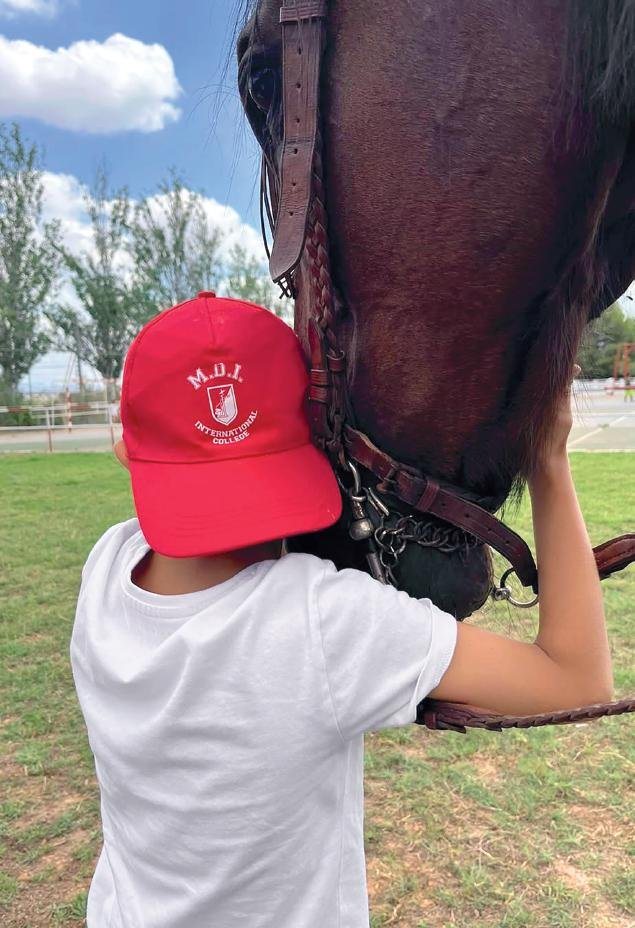
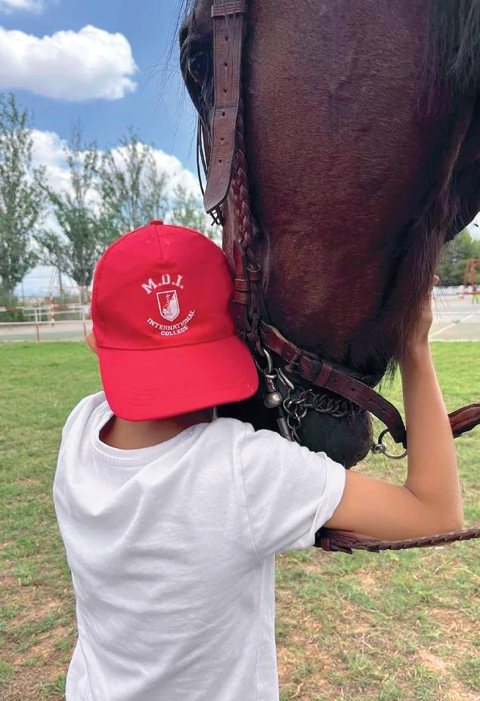
A full-cycle private school just outside Valencia: nursery, primary, secondary and bachillerato. Bilingual teaching in Spanish and English, small classes, outdoor lessons and its own farm with horses.
- Where
- Valencia
- Languages
- Spanish, English
SunClub Business is the directory run by SunClub Network magazine: 240 businesses and professionals in Spain. The editors review every business page before it goes live. Browse the directory →
 TODO POR ELLOS: how to get your child into SunClub Network magazine
 Free help for families of children with special needs in Spain: the FORA project
 Beremenny Club in Valencia: a doula, a paediatrician and antenatal classes in Russian
 MDI International College in Valencia: a review from a mum of three