Free help for families of children with special needs in Spain: the FORA project
Elena Bagaradnikova is the mother of an autistic son and a co-founder of FORA. This free online project helps Russian-speaking families of children with special needs who have moved to another country. Elena explains how the volunteers help and why support only works if you can talk about your child in your native language. She also says what to do when you’re told “nothing can be done”.
Partner content. Prices and terms as of the publication date.

Some people find that their mission chooses them. Elena Bagaradnikova and her team, mothers of children with special needs themselves, have become the only source of support and motivation for many Russian-speaking families. We talk about how fear and confusion turn into strength, and what happens when parents and children hear, at the hardest moment of their lives, that they are not alone.
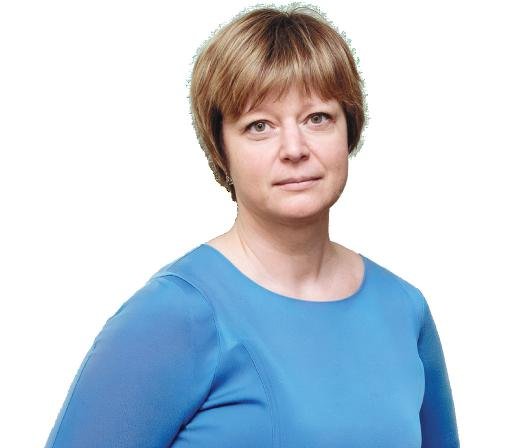
Elena Bagaradnikova is a co-founder of FORA, an international charity project that helps immigrants and refugees who have children with disabilities. She is also an international expert on autism.
In this article
How the FORA project began
Elena, tell us how it all started. How did you come to be doing what you do now?
To be honest, I never planned to launch international projects. It all started with something very personal. When we realised my eldest son had autism spectrum disorder, I was lost. It was the same confusion I would later see in so many other mums. You don’t know where to go, who to believe or how the support system works. What are you even supposed to do tomorrow?
It soon became clear that a family in this situation has to be an advocate, a researcher, a coordinator and an interpreter between different systems, all at once. Nobody comes along and maps out the route for you. You find your own way, often in the dark, with the feeling that you’re surrounded by walls you can’t get past.
Little by little, trying to help my own child turned into helping others. First came a parents’ community, then work with the education system, support for families and promoting inclusion. In 2022 we emigrated, which took things to a new level: my team and I launched the FORA charity project.
Many of our readers have moved countries too and know the feeling when the ground shifts beneath your feet. What was it like for you, moving with a child who has special needs?
Emigrating showed me the scale of the problem, which until then I had only partly seen. I saw huge numbers of Russian-speaking families of children with special needs literally getting lost between countries, systems and languages. People move and find that everything they knew has stayed behind: all their contacts, all their specialists, the whole support system they were used to. Here there’s only an unfamiliar language, rules that make no sense to you and a child who needs help right now. Waiting six months for all the paperwork to come through isn’t an option.
FORA grew out of that experience, as a project to support families who have emigrated. Today we work online, free of charge, with people all over the world. We help them find specialists, information and, perhaps most importantly, the feeling that they’re not alone.
Free help: psychologists, ABA therapists, lawyers
Free help from psychologists, therapists and lawyers sounds almost impossible. How does it all work at FORA?
We are the only international charity project working in Russian with families who have moved to another country and have a child or adult with special needs. Honestly, there are no other projects like it. We know that for certain, because we looked. FORA is above all a first port of call. People come to us when they haven’t yet settled in or put down roots, or when they’re only planning a move. Others are already in a situation where they don’t know where to go or what to do. We help them make sense of education, healthcare, social support and therapy services in their new country.
We run support groups for parents and social groups for teenagers and young adults with special needs. And yes, it’s all free. It’s all done by volunteers: psychologists, ABA therapists, medics, lawyers and parents who have already been down this road and are ready to help others.
Why your native language matters, and how online help works
Why does the language barrier matter so much? After all, Spain has a good support system.
Yes, that’s true. Many families who move here notice that there’s less judgement, more acceptance and more willingness to simply help, as one human being to another. Families of children with special needs feel this very strongly. But there’s something important that people rarely say out loud. Even in the most tolerant country, help can be almost out of reach because of the language barrier. We’re talking about a child’s behaviour and fears, a family in crisis, medical diagnoses. That’s a world away from chatting in a shop. An adult may still manage to explain something in Spanish, but a child with autism, anxiety or communication difficulties can’t. For them, switching language at a moment of stress is almost impossible. That’s why being able to speak your native language is far more than a convenience. It’s what makes any help possible in the first place.
How many mums do you think are lying awake right now, unaware that there are people ready to help?
A great many. It breaks my heart. People simply don’t know we exist. That’s why every mention of FORA and every link you pass on counts for much more than a quick share. Somewhere, right now, there’s a family lying awake at night with no idea where to turn. Your message might be the one that reaches them.
Some people doubt that help online can be the real thing. I want to say this: even our play therapy and ABA therapy take place online, and it works. Others feel it isn’t right to get help for free. They can make a donation through our Telegram channel, which is in Russian, and that’s a way of taking part too.
Where the strength comes from, and why you shouldn’t give up
Elena, you’ve spent so many years giving yourself to others. Where do you find the strength when you have none left?
From the smile of a mum who at first seemed to have completely forgotten how to smile. From teenagers in the social group who suddenly start chatting to each other as if there were no group leaders at all, as if they were simply friends. From the messages that come in after a consultation: “Thank you, I can finally breathe” or “At least now I know what to do”. That “now I know” is small, but it carries enormous weight, because behind it there are often months of fear, helplessness and feeling trapped. And when that “now I know” finally comes, I feel in my bones why I do all this, and it fills me with strength for the next step.
You’ve created a project that, in an ideal world, shouldn’t need to exist. It’s needed because the system fails to act. How do you feel about that?
I genuinely dream of a world where I won’t have to do most of what I do. Where the system listens to families of its own accord. Where parents don’t have to play a game that’s part survival challenge, part legal thriller just to get help for their child. But for now, reality is a bit different. So my main principle is not to give up too early. Even when everyone around me thinks nothing can be done. Especially then. Because that’s exactly when I start phoning, writing, bringing people together and connecting specialists with parents. At some point it turns out that a solution existed after all. It just wasn’t in plain sight.
Tell me something is “impossible”, and it’s like a red rag to a bull.
Advice for parents, and how to support FORA
What would you say to readers who may be going through something similar right now: a move, confusion, a feeling that there’s no help out there?
Don’t go through this alone. That’s probably the most important thing I can say. It’s very easy to shut yourself away with the feeling that “we’re the only ones going through this”. Yet it’s the experience of other families and a real community around you that save you an enormous amount of energy and spare you a lot of despair. And don’t be afraid to ask for help. Many parents spend years believing they have to cope on their own. That isn’t true. Good support is a basic need, neither a luxury nor a sign of weakness. Sometimes one question, asked at the right time, changes a great deal. And please don’t believe it when you’re told “nothing can be done”. I’ve heard those words far too many times over the years. And far too many times it turned out afterwards that there was a solution. Don’t stop at the first “no”. Sometimes that’s exactly where things begin.
If someone doesn’t have a child with special needs but wants to support your project, how can they help FORA?
Tell people about us. It really does mean a lot. Imagine if everyone who reads this article told at least one family who needs our help that we exist. I promise you the world would be a happier place. You can become a volunteer, and you don’t have to be a specialist: sometimes simply talking to someone who has been through something similar makes a huge difference. You can help with translation, mention us on social media, show people around their new city and help them deal with government offices, or support new families in your town. If you’d like to help financially, all the contact details are on our Telegram channel and our website.
Emigration can so easily drive people apart. And the feeling that “we’re not alone here” is what adapting, staying resilient and building a new life all rest on.
FORA works online and helps Russian-speaking families of children and adults with special needs all over the world. All help is free. If you know a family who is struggling right now, just send them this article and invite them to the Telegram channel.


This version of the article was translated from Russian with the help of AI.
Contact
FORA charity project
Visit website →SunClub Business is the directory run by SunClub Network magazine: 240 businesses and professionals in Spain. The editors review every business page before it goes live. Browse the directory →
Add your business to the directory: a basic business page is free →
 TODO POR ELLOS: how to get your child into SunClub Network magazine
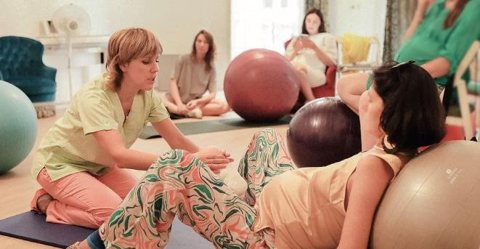 Beremenny Club in Valencia: a doula, a paediatrician and antenatal classes in Russian
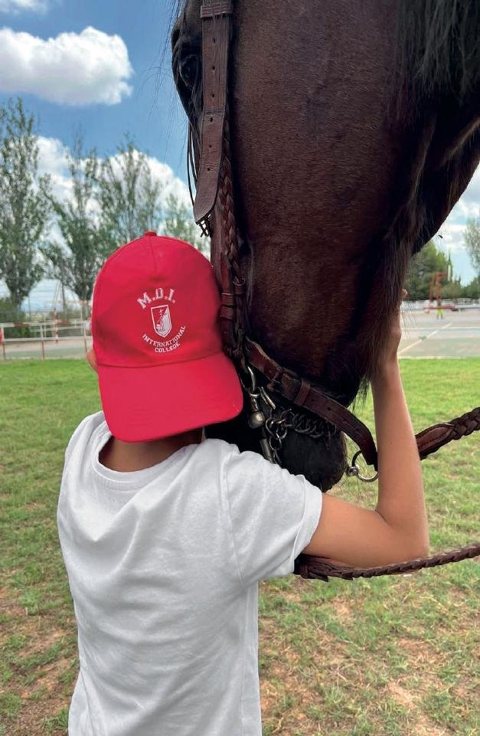 MDI International College in Valencia: the school that knows every child by name
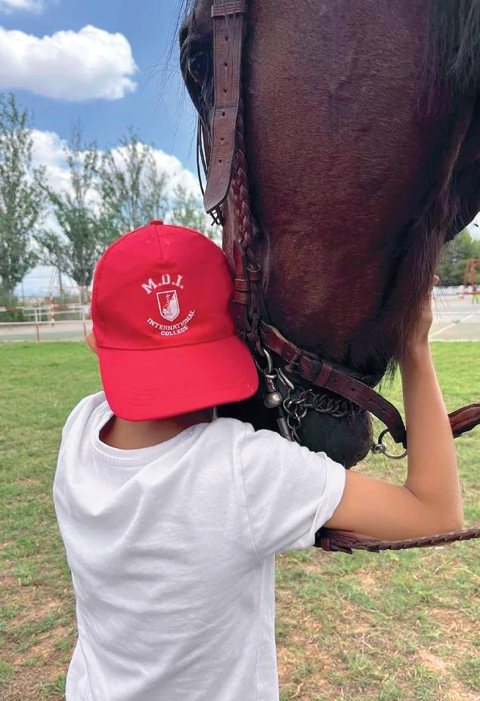 MDI International College in Valencia: a review from a mum of three