Spain’s general election on 29 November 2026: who can vote and what the parties promise foreigners and autónomos
On 29 November 2026 Spain elects a new parliament. Only Spanish citizens can vote, but the new majority will shape the rules on residence permits, citizenship, autónomos and renting. We read the parties’ manifestos and official statements as they stood on 15 November and set out what they promise, how long a law takes and which dates to note.

Only Spanish citizens can vote in this election, so most of our readers with a residence permit will follow the campaign from the sidelines. Yet it is the new parliament and the new government that will decide whether to change the rules on residence, citizenship, autónomos, renting and tax.
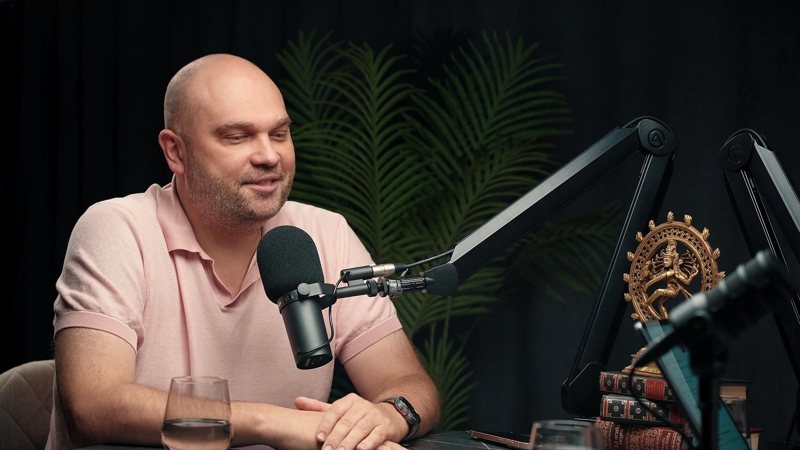
Migration is one of the big themes of the campaign. Las Provincias reports that Pedro Sánchez told Jordi Wild in an interview that without a larger migrant population the country would grow poorer. El País writes about Vox’s plan to review some of the citizenships already granted, and Las Provincias about the People’s Party pledge to protect the main home of the self-employed. We checked these stories against the primary sources: the manifestos, the parties’ official statements and the recording of the interview. What follows is what had been published by 15 November.
In this article
When is the election and what is being elected
The election was called by Royal Decree 806/2026, published in the BOE, Spain’s official gazette, on 6 October 2026. Voting takes place on Sunday 29 November for both chambers at once: the Congress of Deputies and the Senate. The current parliament, elected on 23 July 2023, could have run until 2027, but it has been dissolved early and the election is being held this year.

The Congress has 350 deputies. The province of Valencia elects 16 of them, Alicante 12 and Castellón 5. The campaign runs from 13 to 27 November, 28 November is the day of reflection, and the new chambers meet for the first time on 23 December.
Who can vote in Spain
In a general election only Spanish citizens aged 18 or over who are on the electoral roll can vote. This is set out in Article 13 of the Constitution and Article 2 of the electoral law (LOREG). A residence permit, long-term residence or temporary protection does not give you a vote in this election.
Foreigners can vote in Spain only in municipal elections (and, for EU citizens, European Parliament elections), and not every foreigner qualifies. That right belongs to citizens of EU countries and of countries that have a reciprocity agreement with Spain, and you have to register on the roll in advance. For the 2023 local elections there were 13 reciprocity countries, according to INE, the national statistics office. The United Kingdom is one of them. Ukraine and Russia are not.
If you already hold Spanish citizenship, you vote like any other Spaniard. This election uses the electoral roll as it stood when it closed on 1 August 2026 (a date that follows from Article 39 of the LOREG). If you became a citizen after that, you may not be on it. You can check whether you are on the roll and where your polling station is on the INE website, under “Consulta de mesas y locales electorales” (polling stations look-up), or by phone on 900 343 232.
Polling stations are open from 9:00 to 20:00. To vote by post, you must go in person to a Correos post office with your DNI (Spanish ID card) and apply by 19 November. Your voting papers will arrive by post between 9 and 22 November, and you must return the ballot by registered post no later than 25 November. These dates appear in the calendar published by the Central Electoral Board.


Whose manifestos we read
We took the four parties with the most seats in the Congress after the 2023 election and list them in the same order throughout, by those seats: the People’s Party (PP) 137, the Socialist Party (PSOE) 121, Vox 33 and Sumar 31. The figures come from the official 2023 results in the BOE.
This time Sumar is standing as Frente Amplio (“Broad Front”), an alliance of Movimiento Sumar, Izquierda Unida, Más Madrid and other parties. In many provinces, including Madrid, Málaga and Murcia, Podemos is running on a separate list, so we looked at it as well. In Valencia, Alicante and Castellón, according to the list of registered candidates, neither Frente Amplio nor Podemos has a list of its own. There the joint list is “Compromís: Front Valencià”, made up of Compromís, EUPV (the Valencian branch of Izquierda Unida), Podem (the Valencian Podemos) and ERPV, and that is the one we covered for readers in the Valencian Community. Frente Amplio counts Valencia among its regional coalitions. For the Senate in the province of Valencia, PSOE, Compromís and EUPV are standing together as “Senado de Progreso”.
We did not cover parties that stand only in their own regions (ERC, Junts, EH Bildu, PNV, BNG and others).
By 15 November only the PP had published a full manifesto. That is why some parties below have many points and others very few: it reflects what each had put out by that date.
The PSOE announced its manifesto on 15 November at a rally in Alcorcón, near Madrid, as reported by Demócrata. A recording of the rally is on the party’s channel. By the evening of 15 November the text of the manifesto was not on psoe.es, so we do not go through the PSOE’s pledges below.
| Party | Seats in 2023 | Published by 15 November |
|---|---|---|
| PP | 137 | Manifesto “Reconstrucción Nacional”, 82 pages, 249 points |
| PSOE | 121 | We found no manifesto text on the party site. It was announced at a rally on 15 November |
| Vox | 33 | Summary of the “Es sentido común” manifesto on the party site, 13 sections. We did not find the full text |
| Frente Amplio (formerly Sumar) | 31 | We found no manifesto, only proposals in press releases |
| Podemos | not listed on its own | We found no election material on the party site |
| Compromís: Front Valencià | not listed on its own | We found no manifesto, only statements on the Compromís site |
For the PP pledges below we give the point number and the page of that PDF, with the page repeated only when it changes. Quotations from manifestos and statements are our own translation.
Residence permits and the immigration law
Foreigners’ rights are currently governed by the immigration law (Ley de Extranjería) and its implementing regulations. Here is what the parties promise.
PP. A single authority for all migration policy (point 35, p. 21). Points-based visas that reward education, experience, language and integration. To work in sectors short of staff, people would be able to come either with a contract signed in their home country or on a temporary job-seeking visa, with checks and fixed time limits (point 40, p. 22). Annual quotas on worker numbers, open only to countries that cooperate on returning their nationals (point 41). Anyone renewing a temporary residence permit under the general scheme would have to sign an “integration commitment”: learn Spanish, know the Constitution and EU values, and prove it at renewal (point 43, p. 23). Expulsion would be the rule for foreigners convicted of sexual offences or violent crimes (delitos de sangre), and for repeat offending (point 44).
PSOE. We did not find a full PSOE manifesto for this election. In an interview with The Wild Project, published on 13 November, Pedro Sánchez said (at about 1:02:46 in the recording, our translation): “If we don’t increase the migrant population in our country, in 20 or 30 years we’ll have a workforce much like the one we had in 1980 or 1990.” And a little later: “…the pie, which is the welfare state, will get smaller, and so we’ll be poorer.”
Vox. Abolish arraigo, the route to residence based on ties to Spain. A “remigration” plan for foreigners who, in the party’s words, “do not contribute or live on public subsidies that do not reach Spaniards”. Deportation for serious or repeat offences. Vox also wants positive administrative silence (no answer in time means approval) and a self-declaration instead of a permit to become the general rule, except in immigration.
Frente Amplio, Podemos, Compromís: Front Valencià. We found no proposals on residence permits in their published material.
Regularisation in Spain
Spain carried out a regularisation in spring 2026. The government launched it with Royal Decree 316/2026, and applications were accepted from 16 April to 30 June. According to the government, 1,174,978 applications were filed, 79.6% of them under “extraordinary arraigo”.
PP. “We will ban mass and indiscriminate regularisations by law, and arraigo will be the exception” (point 42, pp. 22–23). Being on the padrón (town hall registration) would not on its own be enough to receive cash benefits, other than emergency ones.
PSOE. We did not find a full manifesto. In the same interview Sánchez put the number of people in the “regularisation plan” at “around 1,200,000”. For comparison, the government counts 1,174,978 applications.
Vox. Ban mass regularisations and stop people who entered illegally from obtaining legal status. Abolish arraigo.
Frente Amplio, Podemos, Compromís: Front Valencià. We found no proposals on this in their published material.
Spanish citizenship
At present, citizenship by residence is normally granted after 10 years of legal residence. For people who are nationals by birth of Latin American countries, Andorra, the Philippines, Equatorial Guinea and Portugal the period is 2 years, and for refugees 5 years (Article 22 of the Civil Code). Citizens of Ukraine and Russia normally need 10 years.
PP. “Citizenship is not given away” (point 140, p. 49). A new citizenship law requiring legal and continuous residence, sufficient Spanish, knowledge of history, institutions, culture and constitutional values, good civic conduct, a clean criminal record, and taxes and social security contributions paid. Preferential treatment would be kept for the countries of the Hispanidad, the Spanish-speaking world linked to Spain by history, culture and language (point 141, p. 50). Rules on loss of citizenship for those who are not Spanish by birth, after a final conviction for certain serious crimes (offences against life or national security, sexual offences and others), without leaving anyone stateless (point 142).
PSOE. We did not find a full manifesto.
Vox. Scrap the “fast tracks” to citizenship, tighten the requirements and review grants of citizenship it describes as fraudulent. A headline in El País on 14 November links this pledge to 300,000 Spaniards of Moroccan origin. We did not find that figure in Vox’s material on the party website.
Frente Amplio, Podemos, Compromís: Front Valencià. We found no proposals on this in their published material.
Who comes first for benefits and social housing
PP. Priority access to some benefits and public resources for people with a “real, lasting and verifiable” connection with Spain, taking into account the padrón, contribution record and length of residence. The manifesto says that these criteria “cannot be based solely on nationality”, because they are limited by the Constitution and EU law (point 98, p. 40).
Vox. “National priority”: Spaniards first in line for social housing, nursery places, meal and transport vouchers, benefits and social services. The minimum living income (IMV) only for Spaniards on low incomes. A tax on money sent abroad.
PSOE, Frente Amplio, Podemos, Compromís: Front Valencià. We found no proposals on this in their published material.
What the parties promise autónomos
How contributions and tax for autónomos (the self-employed) work today is covered in our article “How to register as autónomo in Spain in 2026”, and how being autónomo compares with running an SL company in “Autónomo or SL”.
PP. New autónomos would pay no social security contributions in their first year, nor in the second if their income is below the minimum wage. An autónomo’s main home would be protected “by default”, so that taking a risk in business does not mean risking the house (point 170, p. 59). With turnover under €85,000 there would be no need to charge or declare IVA (Spanish VAT). Two half-yearly returns instead of four quarterly ones, and just one a year for those starting out. A 100% reduction in employer contributions for the first employee for a year, and 50% for the second (point 171). In the event of serious illness, a reduction in contributions from the first day of sick leave (point 172). After parental leave, a 100% reduction in contributions for two years (point 161, p. 56).
PSOE. We did not find a full manifesto.
Vox. Zero contributions for autónomos earning below the minimum wage, and above it a progressive contribution starting at €50.
Frente Amplio, Podemos, Compromís: Front Valencià. We found no proposals for autónomos.
Housing and renting
First, what applies right now. While parliament is dissolved, government decrees are approved or rejected by the Standing Committee of the Congress (Diputación Permanente). On 12 November it approved Decree-Law 29/2026 on housing and rejected Decree-Law 28/2026 on the stability of rental contracts.
For tenants renting their main home, two provisions of the approved Decree-Law 29/2026 matter. The first concerns extensions. You can ask for a one-year extension on the same terms, and then another, up to two years in total, if three things are true: your contract was in force on 8 October 2026, its mandatory extension period (or tacit renewal) ends before 31 December 2028, and you have had no rent arrears in the last eight months. The landlord has to accept the request, except in three cases. The first is that you have agreed different terms or signed a new contract. The second is that the contract has been extended with the rent cut by at least 5%. The third is that the landlord has told you, within the notice periods set by the tenancy law, that the property is needed for themselves or their family, and that reason is genuine and proven. We did not find a deadline for making the request in the text of the decree.
The second provision concerns rent increases. Until 31 December 2027, the annual increase cannot exceed 2% unless both sides agree otherwise. If the rent is already above the cap set by the reference price index, it cannot be raised at all.
PP. Repeal the 2023 housing law, along with its “stressed areas” and reference price index for rents (point 145, p. 53). Build a million homes (point 144). Cut IVA on the purchase of a first home for under-40s from 10% to 4% and allow it to be paid in instalments along with the mortgage (point 153, p. 54). Extend the state guarantee of up to 20% of a home’s value to buyers under 40 (point 154, p. 55). “Tres años+” (“Three years plus”): an income tax deduction for tenants, and for private landlords who renew a contract for three years with a rise below inflation (point 156). Squatters (okupas) to be evicted within 48 hours by court order (point 157).
PSOE. We did not find a full manifesto.
Vox. Repeal the housing law. Evict squatters in under 24 hours. For a Spanish family buying its first home: 0% IVA on a new property and 100% relief on the transfer tax for a resale one. Legal residence in Spain required to rent. Higher taxes on speculation by investment funds and on buyers from outside the EU. “National priority” in the allocation of social housing and rent support.
Frente Amplio. A tax on the accumulation of housing, set at 10% of each home’s value: for companies from the first property, for individuals from the fourth if together they are worth more than €800,000, except homes let long term at an affordable rent (statement of 28 October). A law on expropriating housing from companies, starting with owners of more than 1,000 homes and later reaching owners of more than 50. Families who live in their own home or let out one flat would not be affected (6 November). Tenants’ unions and “rent strikes”: if the landlord breaks the rules, tenants would pay the full rent into a public fund, and as long as they meet the legal requirements the landlord could not start eviction proceedings for non-payment (12 November).
Compromís: Front Valencià. Its statements talk of housing “to live in, not to speculate with”, but we found no concrete nationwide measures.
Podemos. We found no housing proposals in its published material.
If you are planning to buy, it helps to compare the pledges with the rules in force now: mortgages for foreigners and taxes and fees when buying a flat in 2026.
Tax
PP. Lower income tax (IRPF) for middle and low earners, families, autónomos and young people. No income tax on the minimum wage, with the threshold rising automatically alongside it (point 177, p. 60). Index the tax bands to inflation (point 178). For employees and autónomos aged 18 to 35, a 100% cut in IRPF in the first year, then 75%, 50% and 25% (point 179). 0% IVA on basic food while inflation persists (point 180, p. 61).
PSOE. We did not find a full manifesto.
Vox. Lower IRPF, IVA and corporation tax.
Frente Amplio. An annual wealth tax of 2% on fortunes above €1 million and 3% above €50 million, which, it says, would not affect wages or pensions. Raise the corporation tax that large companies and banks actually pay by reviewing deductions (statement of 5 November).
Podemos, Compromís: Front Valencià. We found no tax proposals in their published material.
Which pledges need a law, and how long that takes
Polling day itself changes no rules. Until a new law or decree appears in the BOE, the current rules apply, including those on residence permits, citizenship and contributions for autónomos.

After the election, parliament meets on 23 December, and the Congress then holds the investiture vote on who becomes prime minister. The first vote needs an absolute majority of 176, while in the second, 48 hours later, a simple majority is enough. If nobody has won support within two months of the first vote, a new election is called (Article 99 of the Constitution). Last time the election was held on 23 July 2023, and the decree appointing the prime minister came out on 17 November, almost four months later.
After that, everything depends on the kind of measure needed to change a rule:
- Foreigners’ fundamental rights are covered by the parts of the immigration law that rank as organic law. Changing them takes 176 votes in favour in a final vote in the Congress (Article 81 of the Constitution).
- Citizenship is governed by the Civil Code, and IVA and IRPF by their own laws, and the 2023 housing law is an ordinary law too. A simple majority is enough for these. The Senate can take up to two months over a bill, or 20 days if it is urgent (Article 90 of the Constitution).
- The government changes the immigration regulations by royal decree, without a vote in parliament. That is how the spring 2026 regularisation was launched.
- A decree-law takes effect at once, but the Congress must approve or reject it within 30 days (Article 86 of the Constitution). A rejected decree ceases to apply: that is what happened to rental Decree-Law 28/2026 on 12 November.
Dates to note
- 13–27 November: election campaign.
- 19 November: last day to apply for a postal vote at Correos.
- 25 November: last day to post your ballot.
- 28 November: day of reflection, no campaigning allowed.
- 29 November: polling from 9:00 to 20:00.
- 23 December: first sitting of the new Congress and Senate, followed by the investiture vote for prime minister.
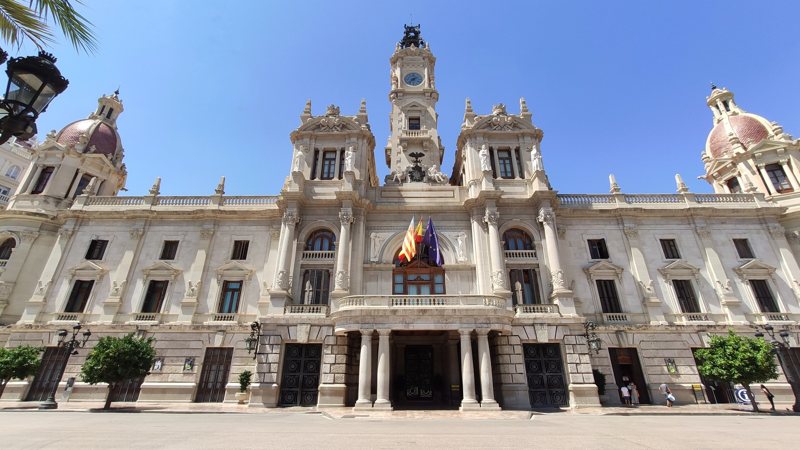
Cover photo: Vickybol, Wikimedia Commons, licence CC BY-SA 3.0. Authors and licences of the other photos are given in their captions.
Frequently asked questions
Is Spain’s general election in 2026 or 2027?
On 29 November 2026. Parliament was dissolved by a decree dated 5 October, even though its term would have run until 2027.
Can a foreigner with a residence permit vote on 29 November?
No. Only Spanish citizens vote in a general election. Citizens of EU countries and of countries with a reciprocity agreement can vote in municipal elections if they register on the roll in advance. Citizens of Ukraine and Russia cannot vote in those either.
I became a Spanish citizen in 2026. Will I be able to vote?
Yes, if you are on the electoral roll. This election uses the roll closed on 1 August 2026, so if you became a citizen after that date you may not be on it. You can check your entry and your polling station on the INE website or by phone on 900 343 232.
Will the rules on residence permits change straight after the election?
No. Until a new law or decree is published in the BOE, residence permits are applied for and renewed under the current rules.
Which parties promise lower contributions for autónomos?
As of 15 November we found such pledges in the material of the PP (zero contributions in the first year, and in the second if income is below the minimum wage) and Vox (zero contributions on income below the minimum wage, and contributions starting at €50 above it). We found no proposals for autónomos from the other parties.
My landlord won’t renew my rental contract. What applies now?
Decree-Law 29/2026 lets a tenant renting their main home ask for an extension of up to two years, if the contract was in force on 8 October 2026, its mandatory extension period ends before the end of 2028, and they have had no rent arrears in the last eight months. The landlord can refuse in a few cases, for example if they gave notice in time that the property is needed for themselves or their family.
Where can I read the parties’ full manifestos?
The PP manifesto is on the party’s website as a PDF, the summary of the Vox manifesto is on voxespana.es, and Frente Amplio’s proposals are on frenteamplio.info. As of 15 November we had not found full manifestos from the other parties.
This version of the article was translated from Russian with the help of AI.
SunClub Business directory
SunClub Business is the directory run by SunClub Network magazine: 240 businesses and professionals in Spain. The editors review every business page before it goes live. Browse the directory →
Add your business to the directory: a basic business page is free →